

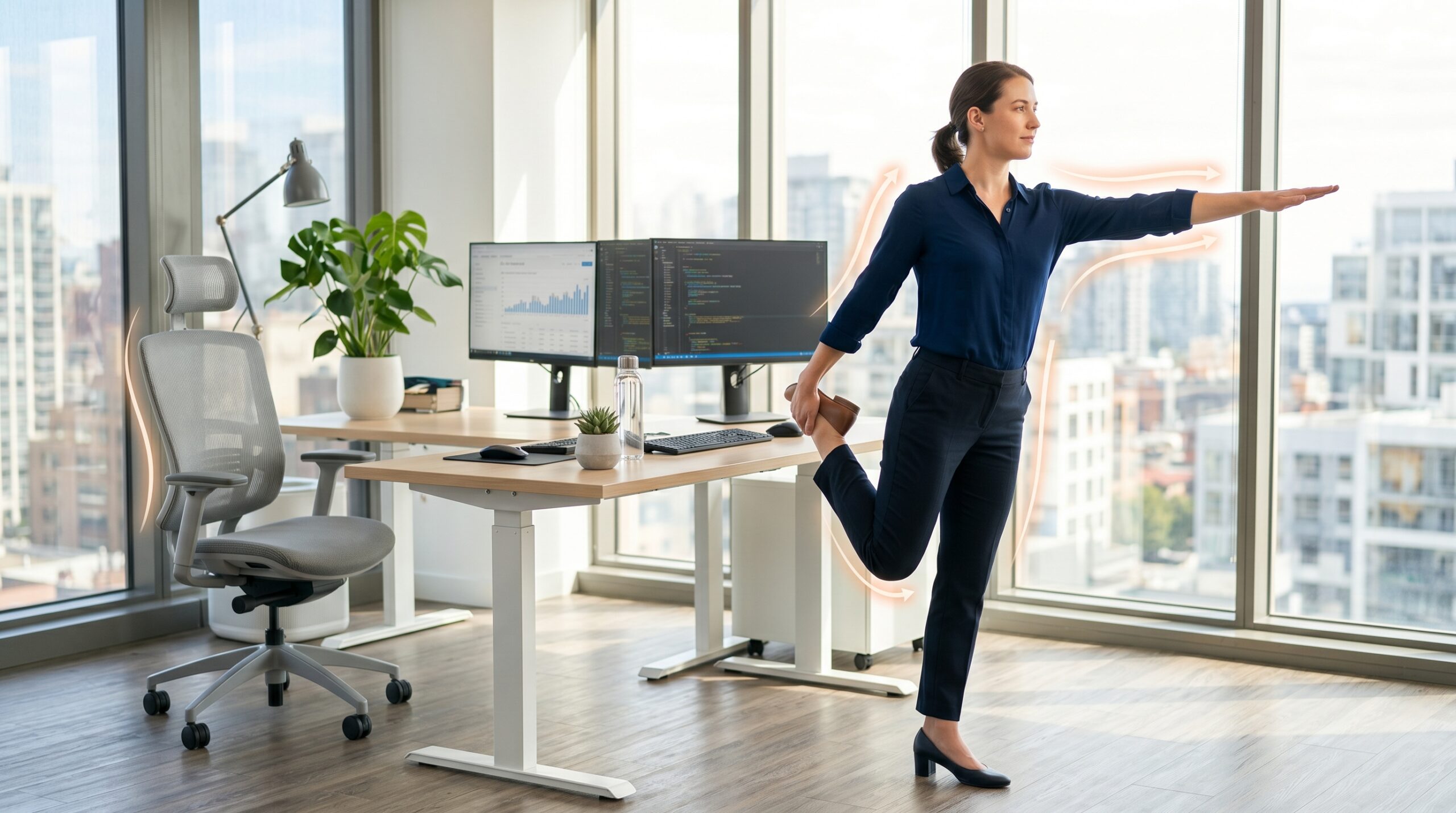
Sitting in front of a computer every day can wreak havoc on your body. That’s especially true if you don’t have an ideal ergonomic set-up (most of us don’t) and stay in the same position for hours at a time.
This lack of variation, along with hunching the shoulders and an uncomfortable chair, can cause back pain, headaches, tension, and tightness in your back, neck, and shoulders. Staying in one position while performing repetitive motions is typical of a desk job, but it may contribute to neck and shoulder pain, musculoskeletal disorders, lower back pain, stress, and even carpal tunnel.
The good news is that moving and stretching is a buildable habit. A few targeted stretches throughout the day can reduce pain, improve circulation, and help you stay focused.
Risks of Sitting Too Long
Your body is made to move, not to sit in the same position for long stretches of time. Sitting too long can affect your health in many ways, including shortening your life span.
A large study looking at 8,000 adults found that sitting for a prolonged period of time increased your risk for heart disease, cancer, diabetes, and even early death. Too much sitting can also cause back pain, neck pain, hip pain, and shoulder pain. Experts warn that prolonged sitting contributes to weight gain and obesity as well.
The reality is that a sedentary lifestyle doesn’t just cause discomfort. It increases the risk of serious chronic conditions that compound over time.
To help break the cycle of prolonged sitting, experts recommend taking a break to move for one to three minutes every 30 to 45 minutes, or at least once an hour. This break can be simply standing at your desk (or using a standing desk), short walks, or doing the stretches below. This movement not only loosens up your muscles and improves circulation, but also gives your mind a boost to help you stay focused.
How to Use These Stretches
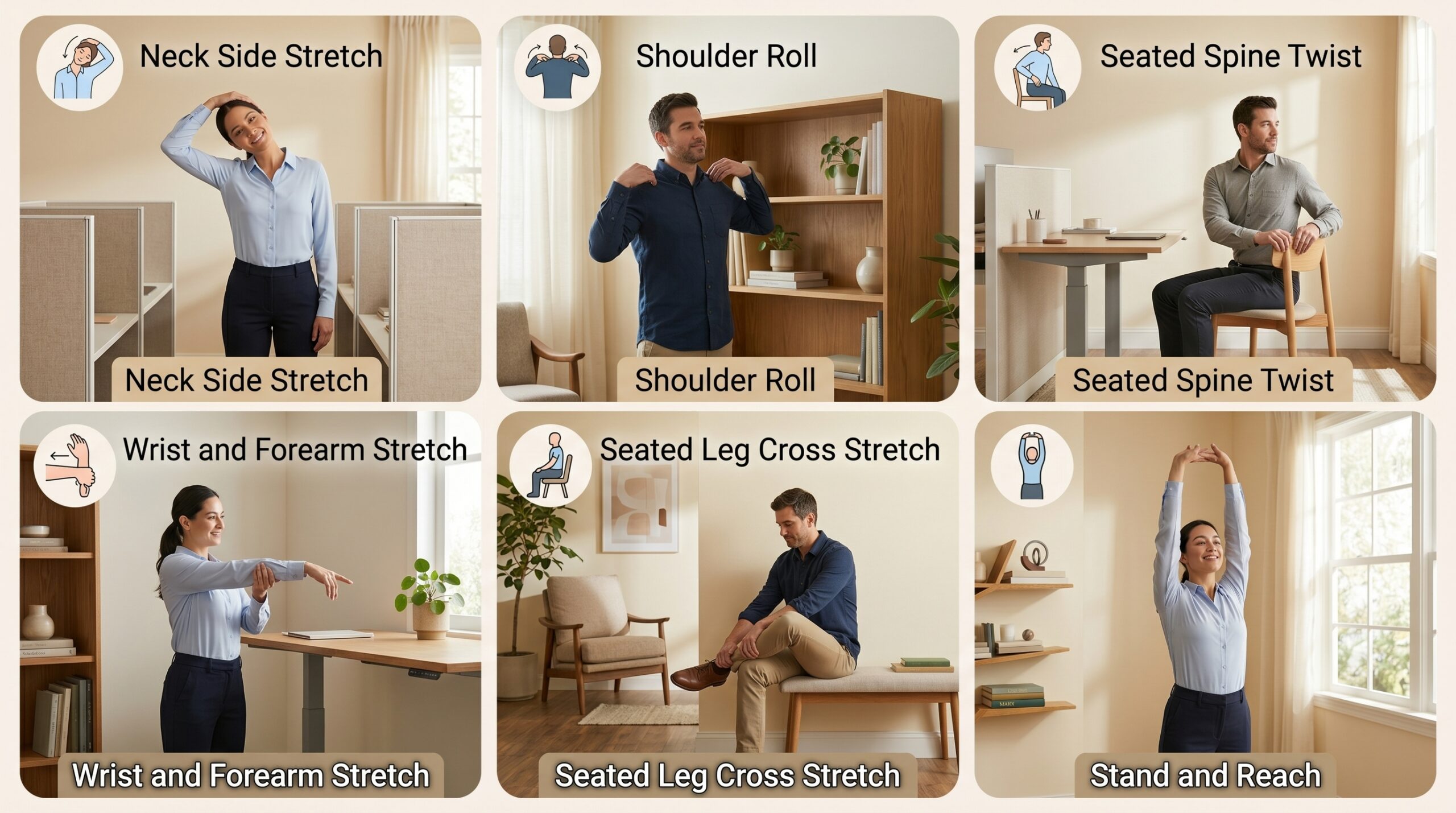
The following flexibility exercises target the neck, back, shoulders, hips, and glutes. Do them as often as you can and you’ll notice less tightness and maybe even more productivity.
- Set an alarm to go off every 45 to 55 minutes and perform the stretches as shown
- Hold each stretch for at least 15 seconds
- Breathe normally throughout and never hold your breath
- Avoid any exercises that cause pain or discomfort
- Exhale as you lean into a stretch for a greater range of motion
10 Best Stretches for Office Workers
1. Chest Stretch
Since most of us spend much of our time hunched forward, it is important to stretch your pectoral (chest) muscles and shoulders. Avoid this move if you have shoulder problems.
- Stand with your feet shoulder-width apart. You can also perform this exercise seated in a chair.
- Move your arms behind you and, if you can, lace your fingers together.
- Straighten the arms and gently lift your hands up a few inches until you feel a stretch in your chest.
- Hold for 10 to 30 seconds.
- Repeat 5 to 10 times.
You can also use a resistance band and hold it overhead, or put your forearms on either side of a doorway and gently press forward until you feel a stretch in the chest.
2. Shoulder Shrug
The shoulders and neck hold a lot of stress and tension from typing, clicking, and scrunching. Most of us hunch much more than we realise, making the trapezius and other shoulder muscles tight with tension. Shoulder shrugs get the blood moving through your traps.
- Sit or stand with your back straight and your shoulders back.
- Lift the shoulders up towards the ears, squeezing them as hard as you can.
- Hold for 1 to 2 seconds and roll them back as you relax down.
- Repeat for 8 to 10 reps.
- End the exercise by rolling the shoulders forward and backwards several times.
Strengthening your shoulder stabilisers alongside regular stretching can help prevent recurring tension in this area.
3. Upper Back Stretch
While shoulder shrugs help get the circulation going, this upper back move stretches all the muscles between the shoulder blades as well as the traps and the shoulders. This is also known as the rhomboid upper or forward stretch.
- Start in a seated or standing position.
- Stretch the arms straight out and rotate the hands so that the palms face away from each other.
- Cross the arms so that the palms are pressed together and clasp fingers together. If twisting the arms doesn’t feel good, simply lace the fingers together.
- Contract the abs and round the back, reaching away with your arms as you relax the head down.
- Don’t collapse. Instead, imagine you’re curving up and over an imaginary ball.
- Hold the stretch for 10 to 30 seconds.
4. Seated Spinal Twist
Sitting for prolonged periods can also affect the lower back, leaving it tight and achy. This twisting stretch will help gently work out some of that tension. If you have back pain, include this stretch alongside other back pain exercises to stretch your lower body and strengthen your core.
- Start in a seated position with the feet flat on the floor.
- Contract the abs and gently rotate the torso towards the right.
- Use your hands on the armrest or seat of the chair to help deepen the stretch.
- Only twist as far as you comfortably can. Keep the back straight and the hips square.
- Hold for 10 to 30 seconds and repeat on the other side.
- Repeat 5 to 10 times on each side.
If you regularly experience low back pain, combining this stretch with short walks throughout the day can make a noticeable difference.
5. Torso Side Stretch
Poor posture can not only cause a hunched appearance, it can also make your back ache. This simple move stretches all the muscles in your back, sides, and arms. You can also take the arms to either side to deepen the stretch down the sides of the torso.
- Start in a seated or standing position.
- Lace the fingers together and stretch them up towards the ceiling.
- Take a deep breath as you stretch up as high as you can.
- Lean to the right, hold for a few seconds, then lean to the left to stretch your sides.
- Exhale and open the arms, sweeping them back down.
- Repeat for 8 to 10 reps.
6. Neck Stretch
Holding tension in the neck can lead to headaches and upper back tension. Many of us drop the head forward when working on the computer, which puts extra stress on the neck muscles. Your head can weigh up to 11 pounds (about 5 kilograms), so that’s a significant amount of stress on your neck over the course of a workday.
- Start in a sitting position with your back straight and shoulders back.
- Reach down and grab the side of the chair with the right hand.
- Gently pull while tilting your head to the left, feeling a stretch down the right side of the neck and shoulder.
- Hold for 10 to 30 seconds and repeat on the other side.
- Repeat 5 to 10 times on each side.
For a deeper release, you can also try an upper trap stretch: gently pull your head toward each shoulder until you feel a light stretch and hold for 10 to 15 seconds on each side.
7. Forearm and Wrist Stretch
You may not realise how tight your forearms can get from typing until you stretch them out. This simple move helps stretch the muscles in the forearms and wrists, which can help prevent hand and wrist pain from forming. This is especially important if you’re concerned about repetitive strain or carpal tunnel from long hours at the keyboard.
- Start in a seated or standing position.
- Stretch the right arm out and turn the hand down so that the fingers point towards the floor.
- Use the left hand to gently pull the fingers towards you, feeling a stretch in the forearm.
- Hold for 10 to 30 seconds and repeat on the other hand.
- Repeat 5 to 10 times on each side.
8. Triceps and Overhead Reach
This two-part stretch targets the triceps and the sides of your torso that often get neglected during a typical workday. It’s a great one for resetting your upper body posture after long periods of typing.
Triceps stretch:
- Raise one arm and bend it so that your hand is reaching toward the opposite shoulder blade.
- Use your other hand to gently pull the elbow toward your head.
- Hold for 10 to 30 seconds and repeat on the other side.
Overhead reach:
- Extend one arm up above your head.
- Reach toward the opposite side until you feel a stretch along your side.
- Hold for 10 to 30 seconds and repeat on the other side.
9. Hip Flexor Stretch
The lower body also gets tight from sitting too much, especially the front of the hips. When you sit, the glutes stretch while the hip flexors are shortened, creating tightness over time. Getting up for this stretch also gives you a welcome break from the chair.
- Start in a standing position.
- Take the right leg back a few feet.
- Bend the back knee in a lunge position and lower both knees until you feel a stretch in the front of the right hip.
- Squeeze the glutes of the back leg to deepen the stretch.
- Hold for 10 to 30 seconds and repeat on the other side.
- Repeat 5 to 10 times on each side.
You can also try a seated version: hug one knee at a time and pull it toward your chest, holding for 10 to 30 seconds before alternating legs.
10. Seated Hip and Inner Thigh Stretch
This two-part stretch opens up the hips and targets the complex series of muscles in the hips, glutes, and inner thighs. It feels great after a long day of sitting. Skip the first part if it bothers the knees.
Seated figure-four:
- In a sitting position, cross the right ankle over the left knee and sit up tall.
- Gently lean forward, keeping the back straight and reaching out with the torso until you feel a stretch in the right glute and hip.
- You can also press down on the right knee to deepen the stretch.
- Hold for 10 to 30 seconds and repeat on the other side.
Inner thigh stretch:
- While seated, take the legs wide with toes pointed out and lean forward with the elbows on the thighs.
- Keep the back straight and the abs contracted.
- Gently press forward while using the elbows to push the thighs out until you feel a stretch in the inner thighs.
- Hold for 10 to 30 seconds and repeat as many times as you like.
Tips for Building a Stretching Habit at Work
Set a recurring alarm: use your phone or a browser extension to remind you to move every 45 to 55 minutes. Even a brief stretch break counts.
Start small: you don’t need to do all ten stretches every time. Pick two or three and rotate throughout the day.
Use transitions as triggers: stretch after every meeting, phone call, or coffee break. Tying stretches to activities you already do makes the habit stick.
Try a standing desk: alternating between sitting and standing throughout the day reduces the strain on your body and keeps your muscles more engaged. Overcoming physical inactivity starts with these small, consistent changes.
Move beyond stretching: short walks, taking the stairs, or standing during phone calls all add up. Ask your manager or HR department about ergonomic furniture if your current set-up isn’t working for you.
When to See a Professional
Stretching is a great first step, but if you’re dealing with persistent pain, limited range of motion, or discomfort that doesn’t improve with regular movement, it may be time to seek professional help.
A physiotherapist can assess your posture, identify muscle imbalances, and create a tailored programme to address the root cause of your pain. Physiotherapy plays an important role in preventing chronic conditions that can develop from years of sedentary work, making it a worthwhile investment in your long-term health.
Keeping Your Body Happy at Work
Sitting in the same position for prolonged periods can cause many health issues, including back pain, neck pain, musculoskeletal disorders, and increased risk of heart disease, cancers, and diabetes. Making an effort to incorporate more movement throughout the day, with experts recommending at least a couple of minutes every 30 to 45 minutes, is one of the best things you can do for yourself.
These 10 stretches for office workers help loosen up your muscles, improve circulation, and maintain your flexibility. They can easily be done at your desk with no equipment needed. Pair them with regular movement breaks, an ergonomic workspace, and professional support when needed for a well-rounded approach to staying comfortable at work.