
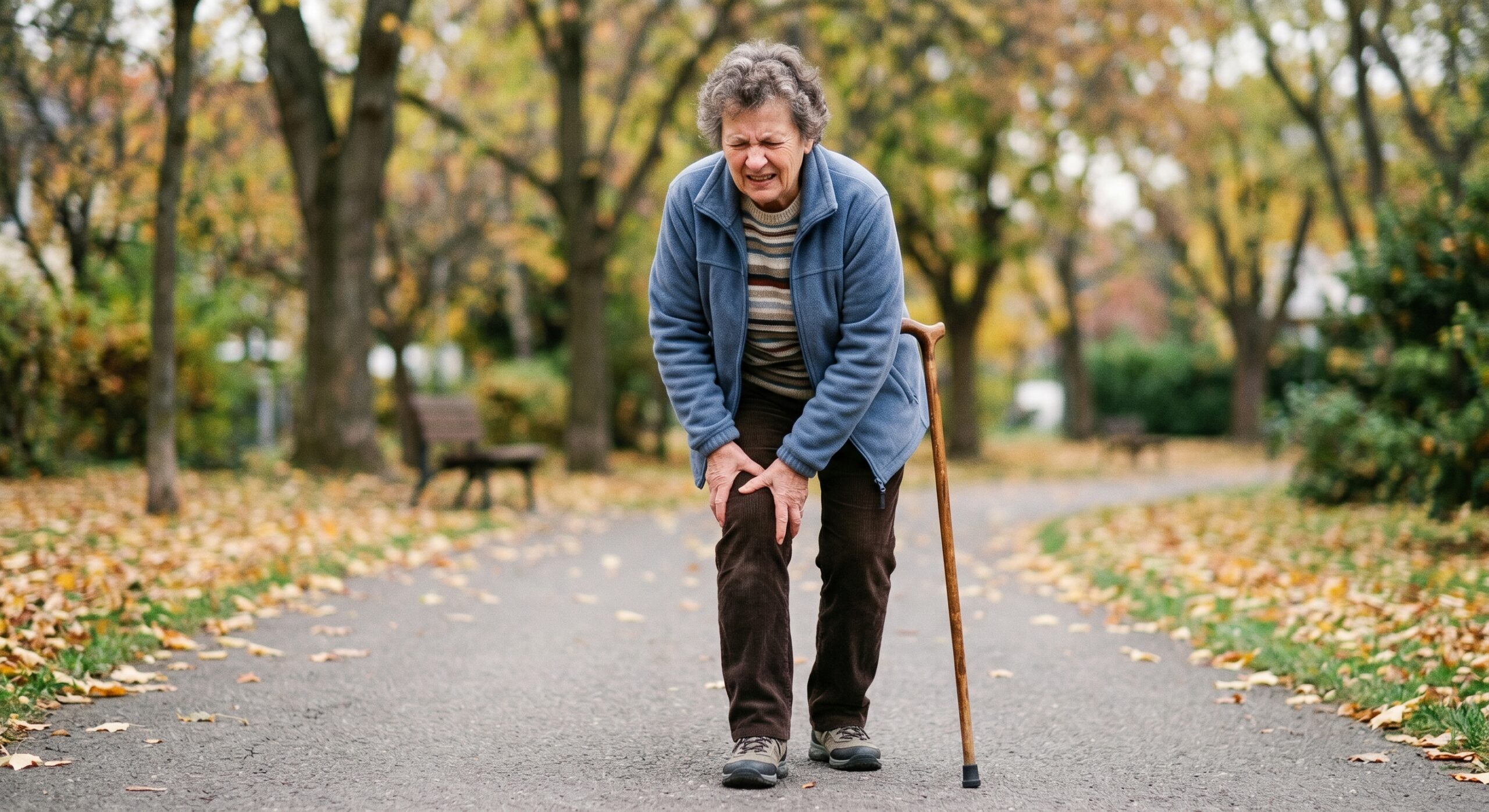
Knee pain is a common complaint that affects people of all ages, and it often shows up when you’re on your feet. Walking shouldn’t cause knee pain unless you have an injury or a medical condition (like arthritis) affecting the joint. Our joints are made for movement, and walking is usually beneficial for knee health. It helps move vital nutrients into cartilage that doesn’t have a blood supply (avascular cartilage), keeps your leg muscles strong, and keeps your tendons flexible.
However, a sudden and drastic increase in activity, old injuries, or an underlying condition can all make your knees hurt when you walk. This article covers the most common reasons your knees hurt when walking, the symptoms to watch for, how to avoid the pain, and how to treat it.
What Causes Knee Pain When Walking?
A sudden and drastic increase in activity (like walking for 4 hours straight when you usually only walk a couple of hours a week) can overwhelm some tissues in the joint. Couple that with insufficient rest, and you may develop an overuse injury. Walking for long hours can also agitate old, improperly healed injuries, and it might aggravate the knee due to an underlying condition like flat feet or arthritis.
Knee pain from walking can be caused by injuries, mechanical problems, types of arthritis, and other problems.
Overuse Injuries
Patellar tendinitis causes irritation and inflammation of the patellar tendon, which runs from the kneecap (patella) to the shinbone and allows you to kick, run and jump. Runners, skiers, cyclists, and those involved in jumping sports and activities may develop patellar tendinitis.
Iliotibial band syndrome occurs when the tough band of tissue that extends from the outside of your hip to the outside of your knee (iliotibial band) becomes so tight that it rubs against the outer portion of your thighbone. Distance runners and cyclists are especially susceptible to iliotibial band syndrome.
Patellofemoral pain syndrome, also known as runner’s knee, is a general term that refers to pain arising between the kneecap and the underlying thighbone. It’s common in athletes, in young adults (especially those whose kneecap doesn’t track properly in its groove), and in older adults, who usually develop the condition as a result of arthritis of the kneecap.
Knee bursitis is another overuse injury. Some knee injuries cause inflammation in the bursae, the small sacs of fluid that cushion the outside of your knee joint so that tendons and ligaments glide smoothly over the joint.
Injuries
A knee injury can affect any of the ligaments, tendons or fluid filled sacs (bursae) that surround your knee joint as well as the bones, cartilage and ligaments that form the joint itself.
An ACL injury is a tear of the anterior cruciate ligament (ACL), one of four ligaments that connect your shinbone to your thighbone. An ACL injury is particularly common in people who play basketball, soccer or other sports that require sudden changes in direction.
Fractures can happen to the bones of the knee, including the kneecap (patella), during falls or car accidents. People whose bones have been weakened by osteoporosis can sometimes sustain a knee fracture simply by stepping wrong.
A torn meniscus affects the tough, rubbery cartilage that acts as a shock absorber between your shinbone and thighbone. It can be torn if you suddenly twist your knee while bearing weight on it.
Mechanical Problems
A loose body can form when injury or degeneration of bone or cartilage causes a piece of bone or cartilage to break off and float in the joint space. This may not create any problems unless the loose body interferes with knee joint movement, in which case the effect is something like a pencil caught in a door hinge.
A dislocated kneecap occurs when the triangular bone that covers the front of your knee (patella) slips out of place, usually to the outside of your knee. In some cases, the kneecap may stay displaced and you’ll be able to see the dislocation.
Hip or foot pain can also lead to knee pain. If you have hip or foot pain, you may change the way you walk to spare your painful joint. But this altered gait can place more stress on your knee joint and cause knee pain.
Types of Arthritis
More than 100 different types of arthritis exist. The varieties most likely to affect the knee include:
Osteoarthritis, sometimes called degenerative arthritis, is the most common type of arthritis. It’s a wear and tear condition that occurs when the cartilage in your knee deteriorates with use and age.
Rheumatoid arthritis is the most debilitating form of arthritis. It is an autoimmune condition that can affect almost any joint in your body, including your knees. Although rheumatoid arthritis is a chronic disease, it tends to vary in severity and may even come and go.
Gout is a type of arthritis that occurs when uric acid crystals build up in the joint. While gout most commonly affects the big toe, it can also occur in the knee.
Pseudogout, often mistaken for gout, is caused by calcium containing crystals that develop in the joint fluid. Knees are the most common joint affected by pseudogout.
Septic arthritis happens when your knee joint becomes infected, leading to swelling, pain and redness. Septic arthritis often occurs with a fever, and there’s usually no trauma before the onset of pain. Septic arthritis can quickly cause extensive damage to the knee cartilage. If you have knee pain with any of the symptoms of septic arthritis, see your doctor right away.
Symptoms of Knee Pain to Watch For
The location and severity of knee pain may vary, depending on the cause of the problem. Signs and symptoms that sometimes accompany knee pain include:
- Swelling and stiffness
- Redness and warmth to the touch
- Weakness or instability
- Popping or crunching noises
- Inability to fully straighten the knee
Risk Factors for Knee Pain
A number of factors can increase your risk of having knee problems, including:
Excess weight increases stress on your knee joints, even during ordinary activities such as walking or going up and down stairs. Being overweight or obese also puts you at increased risk of osteoarthritis by accelerating the breakdown of joint cartilage.
A lack of muscle flexibility or strength can also increase the risk of knee injuries. Strong muscles help stabilise and protect your joints, and muscle flexibility can help you achieve full range of motion.
Certain sports or occupations put greater stress on your knees than others do. Alpine skiing with its rigid ski boots and potential for falls, basketball’s jumps and pivots, and the repeated pounding your knees take when you run or jog all increase your risk of knee injury. Jobs that require repetitive stress on the knees such as construction or farming also can increase your risk.
A previous injury makes it more likely that you’ll injure your knee again.
How to Avoid Knee Pain When Walking
To reduce your risk of knee pain from walking ruining your holiday or daily activity, try the following:
Walk Regularly Before a Big Trip
Get walking in the weeks leading up to your trip. If you haven’t walked much before, start with a 30 minute walk 4 times a week, and add a few minutes every week till you hit an hour. Even if you don’t walk much further than that, your knees will still get more accustomed to the process than they would otherwise.
You can also add a few knee strengthening exercises to your workouts. Lunges, squats, glute bridges, and calf raises work all the different muscle groups supporting the knees, making them more resistant to fatigue and letting them act as better supports for your joints.
Wear Running Shoes
If you’re going to be walking a lot, your feet need to be comfortable. With every step, the structures in your knees must absorb a certain amount of shock and work to keep you stable. They’re subject to excess stress without sufficient support, making them prone to become agitated and painful.
A pair of runners are best for the job (provided they’re not too worn out). They’ll have a good amount of cushioning in the heel to soften your steps and arch support to assist the natural roll of your foot. Pick a pair that isn’t too stiff or tight around the toes. Stiff shoes can make it harder for your foot to roll correctly, and tight toe boxes prevent your toes from naturally stretching out with every step.
Take Breaks
If you feel your knees are getting agitated on a long trek, sit down and let them rest. You should also try organising your schedule to avoid too many long walk days. Even though walking isn’t that strenuous, your muscles and tendons will still need time to recover to be at their best the next day.
Do Some Stretches After a Long Day
In terms of warding off knee pain, stretching relieves muscle tension in the legs and keeps your heart rate up. With your knees receiving a bigger supply of oxygen and nutrients, they’ll be quicker to recover.
Try a Knee Support
It might seem like overkill to get a knee support for walking, but it can help you in a few key ways. The compression knit of a sports compression knee support will:
- Activate the muscles around your knees, improving your proprioception and helping them support your joint.
- Reduce muscle oscillations, which are the uncomfortable vibrations that shoot up your leg when your foot hits the ground. With less shock to absorb, your knees can walk longer distances without pain.
- Boost circulation, ensuring your hardworking muscles and tendons get the needed oxygen and nutrients.
How to Treat Knee Pain From Walking Too Much
Similarly to avoiding knee pain in the first place, you should:
- Wear supportive shoes when you need to walk to reduce stress on the knees.
- Rest your knees, because your body is good at healing minor damage, but not when you keep making it worse. Take a couple of days off long distance walking and gradually work your knees back up to it. Pay attention to how these joints respond to certain distances, shoes, and movements, and adjust as necessary.
- Ice and elevate your knees, because overuse injuries result in inflammation, which you can manage by applying an ice pack and propping your feet above heart level for a few minutes daily.
- Brace your knee for extra support during recovery. An injured knee needs extra support to minimise strain on the irritated tissues. When you’re in pain, nerve signals get interrupted, and your muscles can’t activate as well as they usually do, which increases pressure on the joint. A knee brace with compression knit fabric can activate the muscle, boost blood flow to injured tissues, and reduce the formation of oedemas, your body’s inflammatory agents.
For ongoing pain or a more serious issue, physiotherapy for knee injury rehabilitation can help you recover through a tailored exercise program.
When to See a Doctor
Call your doctor if you:
- Can’t bear weight on your knee or feel as if your knee is unstable or gives out
- Have marked knee swelling
- Are unable to fully extend or flex your knee
- See an obvious deformity in your leg or knee
- Have a fever, in addition to redness, pain and swelling in your knee
- Have severe knee pain that is associated with an injury
Not all knee pain is serious. But some knee injuries and medical conditions, such as osteoarthritis, can lead to increasing pain, joint damage and disability if left untreated. And having a knee injury, even a minor one, makes it more likely that you’ll have similar injuries in the future.
Prevention
Although it’s not always possible to prevent knee pain, the following suggestions may help ward off injuries and joint deterioration:
Maintaining a healthy weight is one of the best things you can do for your knees. Every extra kilo puts additional strain on your joints, increasing the risk of injuries and osteoarthritis.
Getting in shape before you play your sport helps prepare your muscles for the demands of sports participation, so take time for conditioning.
Practising good technique matters too. Make sure the technique and movement patterns you use in your sports or activity are the best they can be, and lessons from a professional can be very helpful.
Building strength and staying flexible is key because weak muscles are a leading cause of knee injuries. You’ll benefit from building up your quadriceps and hamstrings, the muscles on the front and back of your thighs that help support your knees. Balance and stability training helps the muscles around your knees work together more effectively. Because tight muscles can also contribute to injury, try to include flexibility exercises in your workouts.
Being smart about exercise also helps. If you have osteoarthritis, chronic knee pain or recurring injuries, you may need to change the way you exercise. Consider switching to swimming, water aerobics or other low impact activities, at least for a few days a week. Sometimes simply limiting high impact activities will provide relief.
Takeaways
Walking is normally great for your knees, but too much of a good thing can still cause pain, especially if you’ve increased your activity suddenly, have an old injury, or have an underlying condition like arthritis. Through proper conditioning, support, and planning, you can minimise your risk of getting knee pain from too much walking. And through bracing and the RICE method (rest, ice, compression, elevation), you can get the pain under control and keep going.
Knee Pain FAQs
Why do my knees hurt when I walk a lot?
A sudden and drastic increase in activity (like walking for 4 hours straight when you usually only walk a couple of hours a week) can overwhelm some tissues in the joint. Couple that with insufficient rest, and you may develop an overuse injury like patellar tendonitis, iliotibial band syndrome, or patellofemoral pain syndrome. Walking for long hours can also agitate old, improperly healed injuries, or aggravate the knee due to an underlying condition like flat feet or arthritis.
Is walking good or bad for knee pain?
Walking is usually good for your knees. Our joints are made for movement, and walking helps move vital nutrients into cartilage that doesn’t have a blood supply. It also keeps your leg muscles strong and your tendons flexible. However, if you walk too much too quickly, or if you have an injury or condition affecting the joint, walking can cause knee pain.
What type of shoes are best for knee pain when walking?
A pair of runners are best for the job (provided they’re not too worn out). They’ll have a good amount of cushioning in the heel to soften your steps and arch support to assist the natural roll of your foot. Pick a pair that isn’t too stiff or tight around the toes.
Should I use a knee brace for walking?
It might seem like overkill to get a knee support for walking, but it can help in a few key ways. A compression knit knee support can activate the muscles around your knees, reduce muscle oscillations (vibrations that shoot up your leg when your foot hits the ground), and boost circulation so your muscles and tendons get the oxygen and nutrients they need.
When should I see a doctor for knee pain?
Call your doctor if you can’t bear weight on your knee, feel as if your knee is unstable or gives out, have marked knee swelling, are unable to fully extend or flex your knee, see an obvious deformity in your leg or knee, have a fever in addition to redness, pain and swelling in your knee, or have severe knee pain that is associated with an injury.
What are the symptoms of a serious knee problem?
Signs that your knee pain may be serious include swelling and stiffness, redness and warmth to the touch, weakness or instability, popping or crunching noises, and an inability to fully straighten the knee. Septic arthritis often occurs with a fever and no prior trauma, and it needs urgent medical attention.