
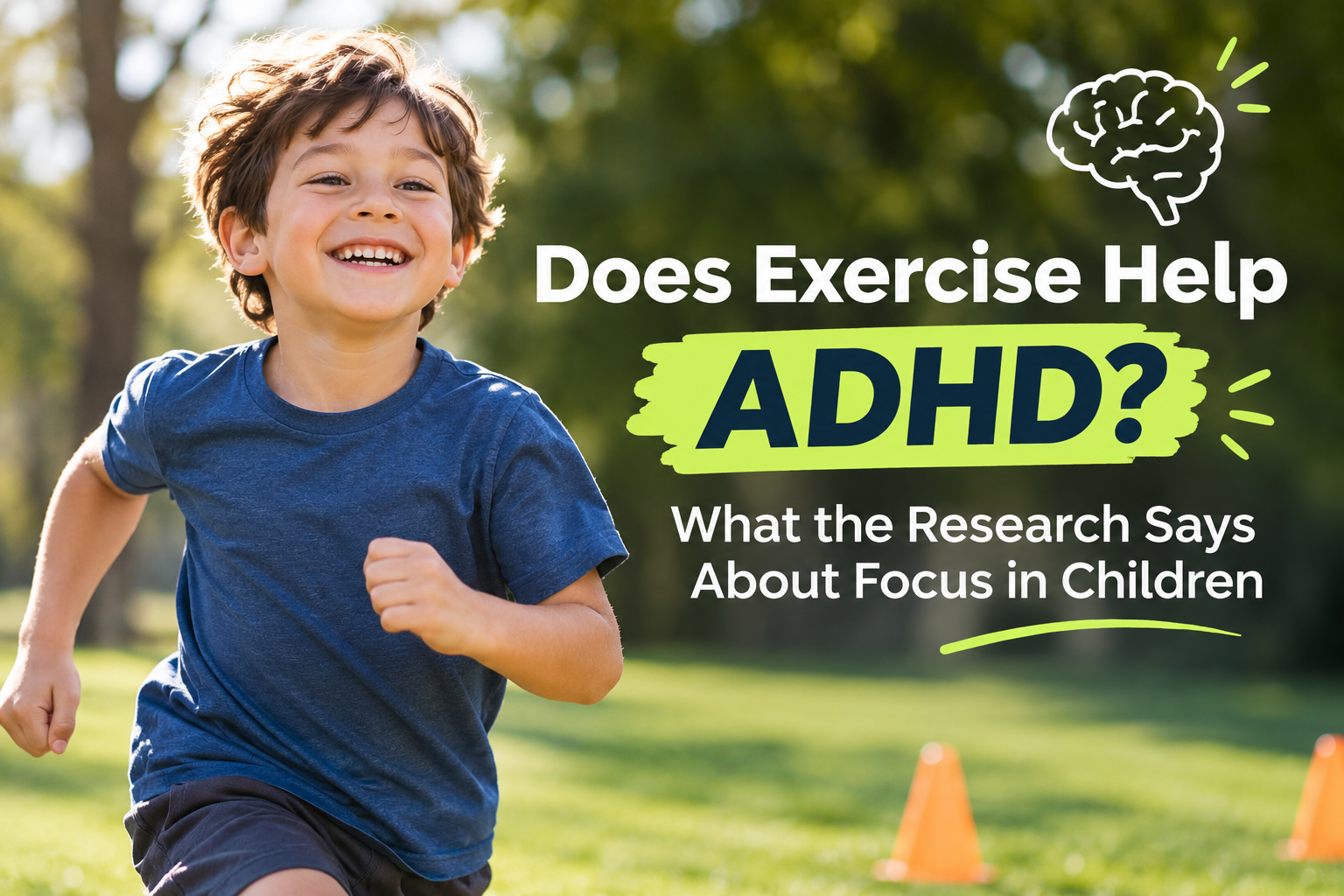
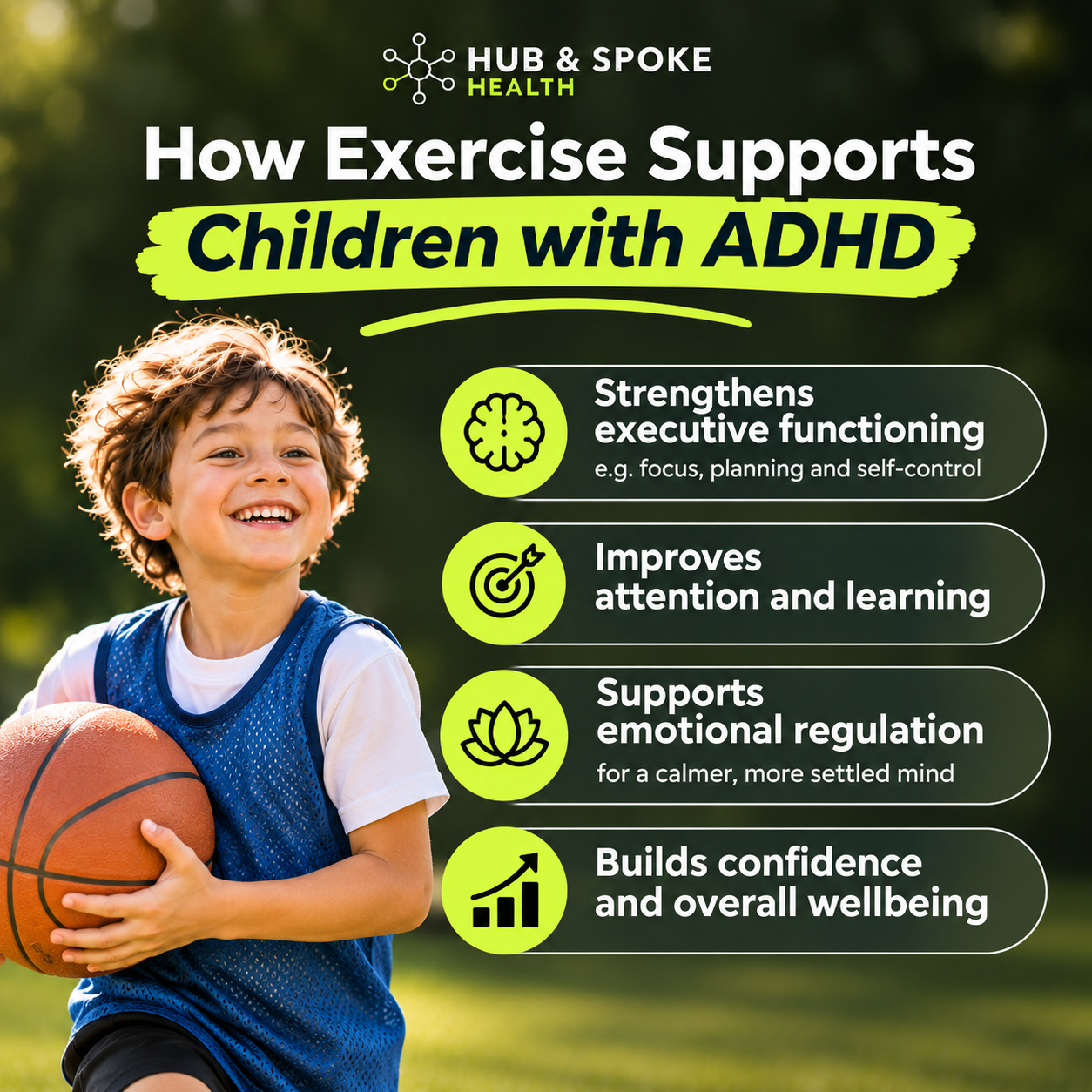
Exercise improves focus, impulse control, working memory, and emotional regulation in children with ADHD. It works by raising the same neurotransmitters that ADHD medications target, and the research now positions regular physical activity alongside medication and behavioural therapy as an evidence-based part of ADHD management. Many children with ADHD are naturally energetic and physically active, which means the right exercise program channels that energy into measurable cognitive gains.
ADHD affects approximately 7.6 percent of Australian children aged three to twelve, 5.6 percent of teenagers, and 2.5 percent of adults. For families looking beyond medication or seeking additional support, structured exercise is one of the most accessible interventions available.
How Does Exercise Affect the ADHD Brain?
Exercise raises the availability of monoaminergic catecholamines, particularly dopamine and norepinephrine, in the brain. Research suggests this stimulates the brain in a way similar to commonly used ADHD medications. These neurotransmitters are essential for attention, motivation, and impulse regulation, and ADHD is characterised by lower baseline levels of them.
The proposed mechanisms involve changes in brain structure, enhanced neurotransmitter availability, and better arousal regulation. Evidence suggests that cognitive performance and memory storage and retrieval are enhanced immediately after exercise, though these effects return to pre-exercise levels once the exercise-induced response on the central nervous system passes.
People with ADHD may experience greater cognitive benefits from a single session of exercise than those without ADHD. A systematic review of 21 studies on exercise and ADHD in children found that as little as 20 minutes of physical activity, exercise, or sport produces measurable improvements in executive function. The review concluded that aerobic exercise in particular drives the strongest gains across inhibitory control, attention, and cognitive flexibility.
What Cognitive Benefits Does Exercise Produce for Children with ADHD?
Regular moderate-to-vigorous exercise is associated with measurable improvements across several cognitive domains that ADHD directly affects. The evidence links increased physical activity to better ADHD symptoms, particularly behavioural and cognitive outcomes.
Documented improvements include faster brain processing speed, better working memory, stronger planning and problem-solving ability, improved attention, and reduced anxiety. Beyond cognition, exercise also supports social skills and emotional regulation, two areas where children with ADHD often need additional development.
Up to 80 percent of people with ADHD experience at least one comorbid mental health condition, including anxiety and depression. Exercise helps manage mood and stress through a combination of neurochemical and psychological mechanisms, offering benefits that medication alone does not always reach.
Children and teenagers with ADHD also face a higher risk of cardiometabolic conditions such as high blood pressure and Type 2 diabetes as adults. Regular physical activity builds cardiovascular fitness, muscular strength, and coordination alongside the cognitive benefits. Young people with ADHD gain the same muscular capacity, strength, aerobic fitness, and motor skill development as their peers, and these physical gains support self-esteem and confidence.
Which Types of Exercise Work Best for Children with ADHD?
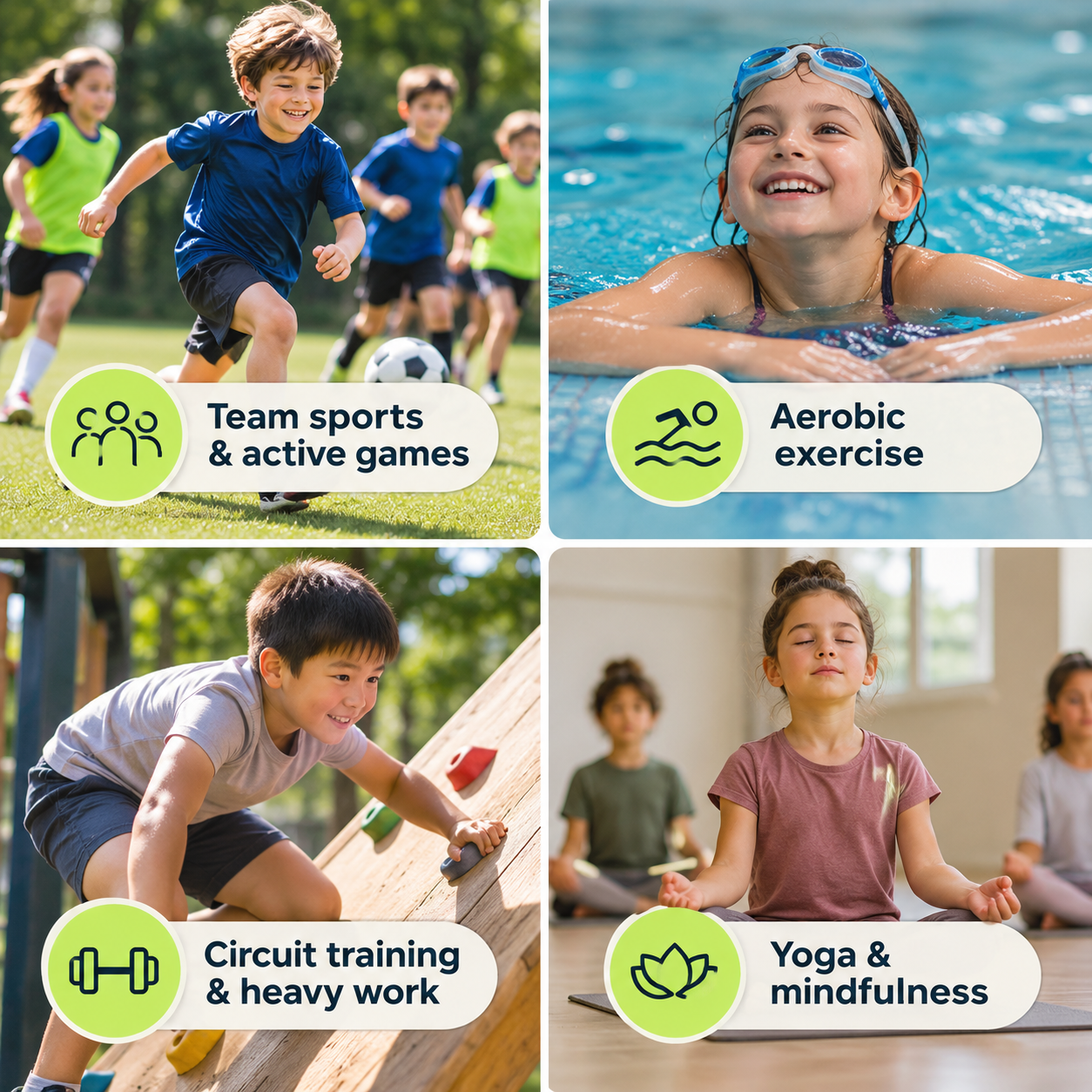
Activities that challenge both body and brain are especially effective. No single activity suits every child, and variety, enjoyment, and engagement matter more than choosing a specific sport.
Cognitively engaging activities
Team sports, ball games such as table tennis or cricket, martial arts, and dance require a child to process changing information while moving. These activities train working memory, impulse control, and flexible thinking in a context that is inherently motivating. The unpredictability of game-based activities holds attention in a way that repetitive exercise may not.
High-intensity bursts
Short, intense intervals of aerobic or resistance exercise release energy and boost concentration. Circuit-style workouts that alternate between different exercises at short intervals match the ADHD brain’s preference for variety and novelty.
Heavy work
Lifting, pushing, and carrying weighted objects (with supervision) provides proprioceptive input that helps regulate the nervous system. These activities are particularly useful before tasks that require sustained concentration.
Aquatic exercise
Water-based exercise offers sensory regulation benefits alongside physical conditioning. The deep pressure input from water provides a calming effect that many children with ADHD respond well to, and the aquatic environment builds confidence in children who may feel less comfortable in land-based group settings.
Yoga and mindfulness-based movement
Yoga builds body awareness, breath control, and emotional regulation. Research suggests yoga one to two times per week can help regulate behaviour by reducing sympathetic nervous system activation and increasing parasympathetic activation, improving emotional self-regulation. The poses, breath control, and mental concentration involved develop self-control, attention, body awareness, and stress reduction skills that carry over into daily life.
Strength and resistance training
Bodyweight exercises, resistance bands, and supervised weight training build impulse control alongside muscular strength. The sustained effort required to complete a set demands focus and self-regulation in a structured, repeatable format that children with ADHD respond well to.
Complex motor-skill activities
Rock climbing, gymnastics, and obstacle courses demand intense coordination, balance, and sustained concentration. These activities combine physical effort with continuous problem-solving, which engages the executive function system more deeply than repetitive cardio alone.
Joint stability considerations
Children with neurodivergent brains often have extra joint flexibility (hypermobility), which can raise injury and dislocation risk during physical activity. Strength and balance training stabilise joints, protect growing bodies, and build body awareness. An exercise physiologist can assess joint mobility and design a program that accounts for hypermobility.
How Much Exercise Does a Child with ADHD Need?
The recommended dose is at least 20 to 45 minutes of moderate-to-high intensity activity, at least three times per week. Australian Physical Activity guidelines recommend at least 60 minutes of moderate-to-vigorous activity daily for all children aged 5 to 17, and children with ADHD who meet this guideline are likely to see cognitive benefits alongside the standard physical health gains.
Intensity matters. Moderate-to-high intensity means breathing harder than normal, sweating, and working at a level where talking becomes difficult. Competitive games, swimming laps, martial arts sparring, and circuit training all meet this threshold.
Regular, varied exercise that the child enjoys should be part of daily life rather than a prescribed treatment block. Sport and structured exercise focus energy and channel it productively. Reducing daily screen time in line with national guidelines also supports the cognitive benefits of physical activity.
How to Structure Exercise for the Biggest Cognitive Gains
Most children with ADHD have no shortage of physical energy. The challenge is channelling that energy into structured activities that produce the strongest cognitive benefits. Five principles help families get the most from an exercise program:
Set clear goals: children respond well when they understand why an activity matters. A checklist or reward system that acknowledges effort engages the motivation centre that ADHD tends to understimulate. “Practise ten catches, then we switch” gives a manageable target with a clear endpoint.
Keep it structured: short, clear instructions work better than lengthy explanations. A coach or exercise physiologist who celebrates progress often and relies on positive reinforcement creates an environment where a child builds skill and confidence simultaneously.
Use movement during focus tasks: letting children move while listening or learning helps maintain attention. This is not a behavioural problem to correct but a legitimate regulation strategy.
Minimise distractions: a calm, supportive environment helps children tune in and feel safe. Reducing visual and auditory clutter during warm-up and instruction lowers the cognitive demand of getting started.
Use short bursts through the day: a five to ten minute walk, jog, or set of jumping jacks can boost dopamine and break through focus barriers between longer tasks. These micro-sessions are especially useful before homework or other demanding cognitive work, because exercise-enhanced focus is strongest immediately after activity.
Add variety across the week: routine provides structure, but changing the pace or type of activity keeps engagement high. Alternating between a team sport, a swim, and a circuit session matches the ADHD brain’s preference for novelty. Occupational therapy can help families build daily routines that support consistent participation.
Track progress visually: calendars, fitness apps, or a tick-off chart on the fridge help children see streaks and build momentum. Visual tracking engages the reward system that ADHD tends to understimulate, turning consistency into a visible achievement rather than an invisible habit.
Can Exercise Replace ADHD Medication?
Exercise is an evidence-based complement to ADHD treatment, not a replacement for medication in children who need it. The two interventions target overlapping mechanisms: both raise catecholamine levels in the brain and both improve attention and impulse control. Combining them produces broader benefits than either alone.
Where exercise adds value that medication does not fully cover is in emotional regulation, motor coordination, cardiovascular fitness, social skill development, and the self-esteem that comes from physical competence. A child on medication may concentrate better but still benefit from the mood regulation, physical health, and confidence that structured exercise provides.
For families who prefer to delay or avoid medication, exercise provides a meaningful intervention with growing evidence behind it. For families whose children are already medicated, exercise extends the benefits into physical and emotional domains. Exercise also has no negative side effects, which makes it a particularly useful option for young people who struggle with medication tolerance.
The decision about medication belongs to the child’s medical team. The decision to include regular, structured exercise is straightforward for every child with ADHD, regardless of medication status.
Frequently Asked Questions
Does a single exercise session improve ADHD focus?
Evidence suggests that cognitive performance and memory storage and retrieval are enhanced immediately after exercise. The effect is driven by an acute increase in catecholamines, the same neurotransmitters that ADHD medications target. These improvements are temporary and return to pre-exercise levels once the exercise-induced response on the central nervous system passes. Regular exercise, rather than single sessions, produces the most consistent cognitive benefits.
What exercise suits a child with ADHD who does not enjoy team sport?
Team sport is one effective option, but not the only one. Swimming, martial arts, dance, circuit training, aquatic exercise, and yoga all produce cognitive benefits. The most important factors are that the activity reaches moderate-to-high intensity, challenges both body and brain, and holds the child’s interest enough for consistent participation. An exercise physiologist can match the activity to the child’s preferences and any joint mobility considerations.
Can exercise help with ADHD-related anxiety in children?
Up to 80 percent of people with ADHD experience at least one comorbid mental health condition, including anxiety. Exercise helps manage anxiety through neurochemical changes, improved sleep, and the psychological benefits of physical competence. Yoga and mindfulness-based movement are particularly effective for children whose ADHD includes a prominent anxiety component, because they build breath control and self-regulation skills that transfer into daily situations.
If your child has ADHD and you want practical, evidence-backed ways to support their focus, regulation, and confidence alongside any existing treatment, an exercise physiology assessment is a direct first step. Hub & Spoke Health delivers exercise physiology and physiotherapy to families across Melbourne, with sessions in the child’s home built around their interests, energy levels, and the goals that matter most. The paediatric allied health team works with the child’s support network to fit exercise into daily life, whether that means a home visit or a school session.