

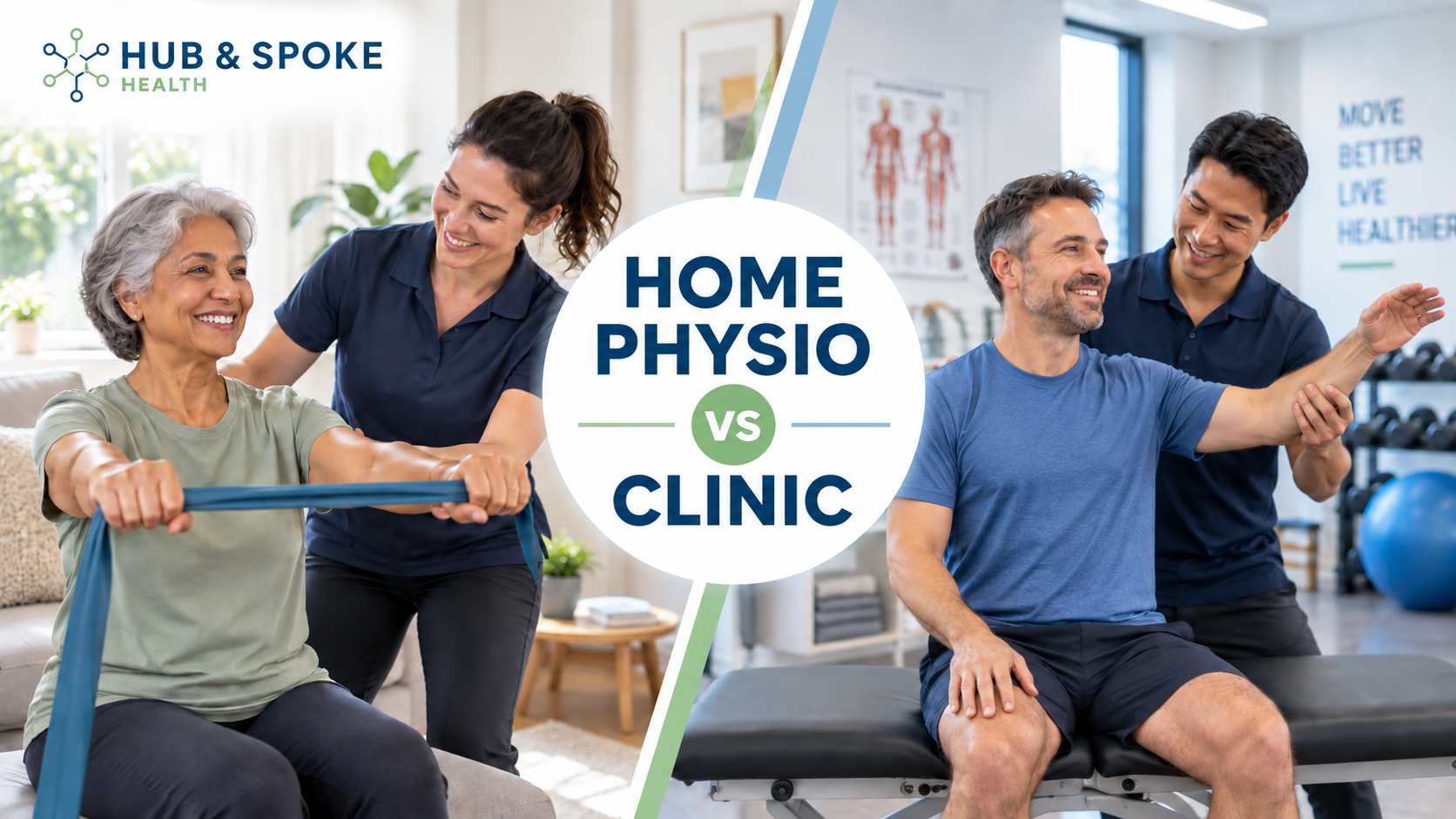
Home physiotherapy is the better choice when you have severe mobility limits, are newly recovering from surgery, or need exercises built around your actual living space. A clinic earns the trip when your recovery leans on specialised equipment or close hands-on monitoring, like a sports injury or a complex musculoskeletal problem. Most people sit somewhere in between, and plenty get their best result by mixing the two.
Both settings do the same core job: improve mobility, reduce pain, and support recovery. The real question is which one removes the barriers standing between you and consistent treatment. Below is how the two compare, when each one wins, and what the research actually shows. If travel or fatigue is the thing getting in your way, mobile physiotherapy is usually the setting worth looking at first.
Home vs Clinic Physiotherapy: A Quick Comparison
| Feature | Home physiotherapy | Clinic physiotherapy |
| Equipment | Portable tools, household items | Advanced machines, hydrotherapy pools |
| Cost per session | $100 to $150 | $70 to $100, plus travel |
| Convenience | No travel required | Requires transport |
| Session length | 45 to 60 minutes, focused | 60 to 90 minutes, attention shared |
| Best for | Mobility limits, chronic conditions | Complex injuries, specialised rehab |
Your choice comes down to your condition, your budget, and how easily you can get to a clinic. Some people combine both approaches for the best of each.
When Home Physiotherapy Is the Better Choice
Home physio suits you when travel is the barrier, not the therapy. If getting to a clinic is painful, exhausting, or simply not possible, care that comes to you protects the one thing that drives results: sticking with the plan. For patients with mobility challenges, removing the trip has been linked to a 23% lift in treatment adherence, according to the Journal of Home Healthcare (2024).
A few signs home is the stronger fit:
- Travelling causes severe pain, or you have no reliable transport
- The nearest clinic is more than 30 minutes away
- Your energy or stamina runs low before a session even starts
- You are managing a chronic condition such as COPD, recovering after a stroke, or in the weeks following a knee replacement
Chronic and post-surgical conditions often do well at home because the familiar setting removes stress and the exercises are tailored to the space you live in. For older clients in particular, our aged care physiotherapy and post-acute care teams build sessions around daily routines rather than around a gym timetable. A home you know well also lowers the trip hazards that make falls prevention and balance training so valuable once mobility is already limited.
When a Clinic Is Worth the Trip
Choose a clinic when the equipment or the monitoring is the point of the treatment. Some conditions need tools you cannot pack into a bag, and a controlled space where a therapist can watch every rep.
Clinics offer:
- Advanced machines such as treadmills, electrotherapy devices, and robotic gait trainers
- Hydrotherapy and pool-based exercise
- Group sessions, where peer encouragement helps motivation
- Frequent, close monitoring so the plan can be adjusted quickly
As Petersen Physical Therapy puts it, home-based care “can be extremely beneficial for certain patients,” but “individuals with complex conditions, or those who require specialised treatments and equipment, may benefit more from receiving their services in a more traditional setting.” Sports injuries and complex musculoskeletal problems tend to fall into that group.
What the Research Says About Home vs Clinic Outcomes
For many everyday conditions, the two settings produce similar results. One study of 205 people with knee osteoarthritis found improvement rates of 52% for home-based care and 51% for clinic-based care, close enough that convenience and cost become the deciding factors rather than effectiveness.
Technology is narrowing the gap further. Wearables and virtual reality systems now guide correct technique, track range of motion remotely, and keep people on their programs between visits. A blended plan can work best of all: research from the Australian Physiotherapy Association (2023) found that combining clinic and home sessions sped up hip replacement recovery by 28%. Learning techniques in a clinic, then doing the maintenance work at home, is a genuinely effective pattern for the right patient.
Cost, Travel, and Funding
Home visits usually cost more per session but remove the hidden costs of getting to a clinic. Typical private ranges run from $100 to $150 for a home visit against $70 to $100 in a clinic, and home care often lands 30 to 50% higher per visit once travel is priced in on the therapist’s side. What the clinic sticker price leaves out is your own travel: parking, transport, time off work, and childcare all add up.
Before you compare, ask for a full breakdown that covers session fees, any equipment costs, travel charges, and what your funding will and will not cover. In Australia many people never pay these rates directly, because physiotherapy at home can be funded through the NDIS, Support at Home, or a TAC claim, alongside private options. Checking your funding first often matters more than the headline per-session price.
How to Decide Between Home and Clinic
Match the setting to three things: your condition, your home, and your access to transport. A quick conversation with your physiotherapist settles most of it. Worth asking:
- How does a home setting compare to a clinic for my specific condition?
- What session frequency and duration do you recommend?
- What equipment will I need, and are there safety concerns with at-home exercises?
- How will we measure my progress?
Your home also needs to be up to the job. Effective sessions need enough clear space to move, safe flooring and lighting, somewhere to store any equipment, and a private spot to work. If your living space cannot offer those, a clinic may be the safer call. And remember the plan is not fixed: many people start in a clinic to learn proper technique, then shift to home-based care for ongoing recovery.
Frequently Asked Questions
Is home physiotherapy as effective as clinic physiotherapy?
For many common conditions, yes. A study of 205 people with knee osteoarthritis found near-identical improvement rates at home and in a clinic. Complex injuries that need specialised equipment are the main exception.
When should you choose a clinic over home physio?
Choose a clinic when your recovery depends on equipment you cannot bring home, such as hydrotherapy pools or robotic gait trainers, or when a sports or complex musculoskeletal injury needs close, hands-on monitoring.
Does home physiotherapy cost more than clinic sessions?
Per session it usually does, often 30 to 50% more once travel is factored in. But it removes your own travel, parking, and time-off-work costs, and in Australia it can be funded through the NDIS, Support at Home, or TAC.
Can you combine home and clinic physiotherapy?
Yes, and it can work better than either alone. One approach learns techniques in a clinic and does maintenance exercises at home. Research has linked this blend to 28% faster hip replacement recovery.
If you are weighing up home physio in Melbourne, our team is happy to talk through whether it suits your goals before anything goes into a plan.