
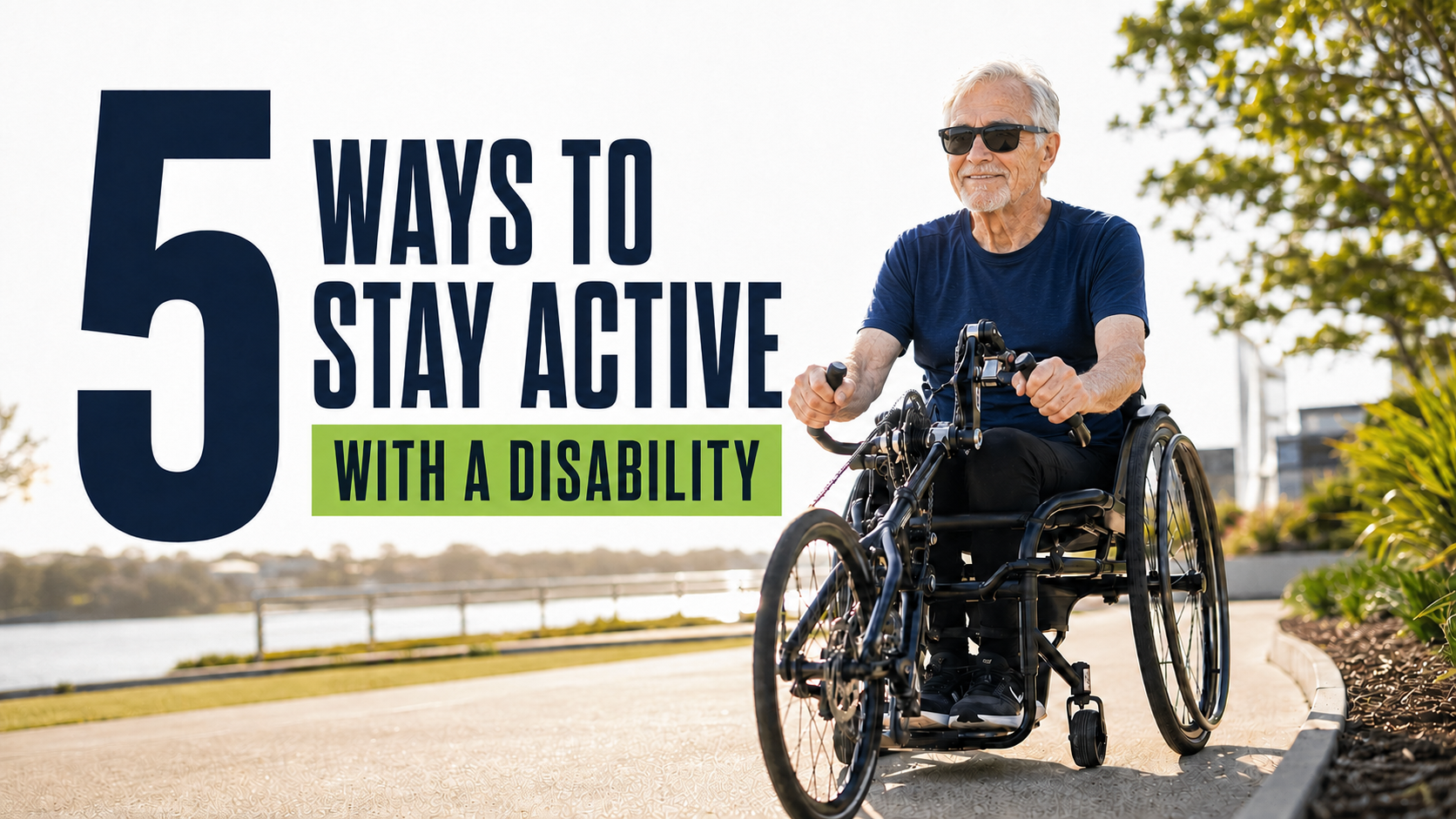
You can stay active with a physical disability at almost any level of mobility, and it does not require a gym. The World Health Organization’s physical activity guidelines for adults living with disability ask you to be as active as your impairment allows, holding range of motion, strength and cardiovascular fitness at the highest level you can reach. In practice that means seated resistance work, walking in a warm pool, adaptive sport, or gardening from a chair.
Around 5.5 million Australians live with disability, and more than half use a mobility aid or a piece of equipment to get around. Movement matters most for people in this position, because the muscle wasting that follows disuse quietly costs them the function they still have.
The health benefits of staying active with a physical disability
Physical activity helps people with a physical disability keep the mobility and function they already have, because it prevents the muscle wasting that follows disuse. Beyond that it lowers the risk of chronic conditions including type 2 diabetes and heart disease, builds strength and flexibility, and improves mood, sleep and energy.
Katie Morris, an exercise physiologist and health coach, ties the first of those straight to independence: continuing to live on your own, getting out into the community and relying less on other people for daily tasks.
The rest stacks up the way it does for everyone else. Staying active improves heart and brain health and lowers the risk of chronic disease. It builds strength, general fitness and flexibility, and confidence and social connection tend to come with it.
Mental health gains arrive quickly. Regular activity improves mood, lowers anxiety and reduces stress, and it improves sleep and energy. Morris notes that regular exercise has been found to be as effective as antidepressant medication in treating mild to moderate depression.
What the physical activity guidelines say for people with disability
The World Health Organization published physical activity guidelines for adults living with disability in 2020. Rather than setting one target everyone has to hit, they encourage people with mobility issues to be as physically active as their impairment allows, and to maintain range of motion, strength and cardiovascular fitness at the highest level they can manage.
Dr Brad Stenner, a Senior Lecturer in the Occupational Therapy Program at the University of South Australia, explains the reasoning in practical terms: once those three decline, the impairment starts affecting other areas of life. For a wheelchair user that might mean building the program around upper-limb movement, or using accessible equipment at an indoor or outdoor gym.
Five ways to stay active with a physical disability
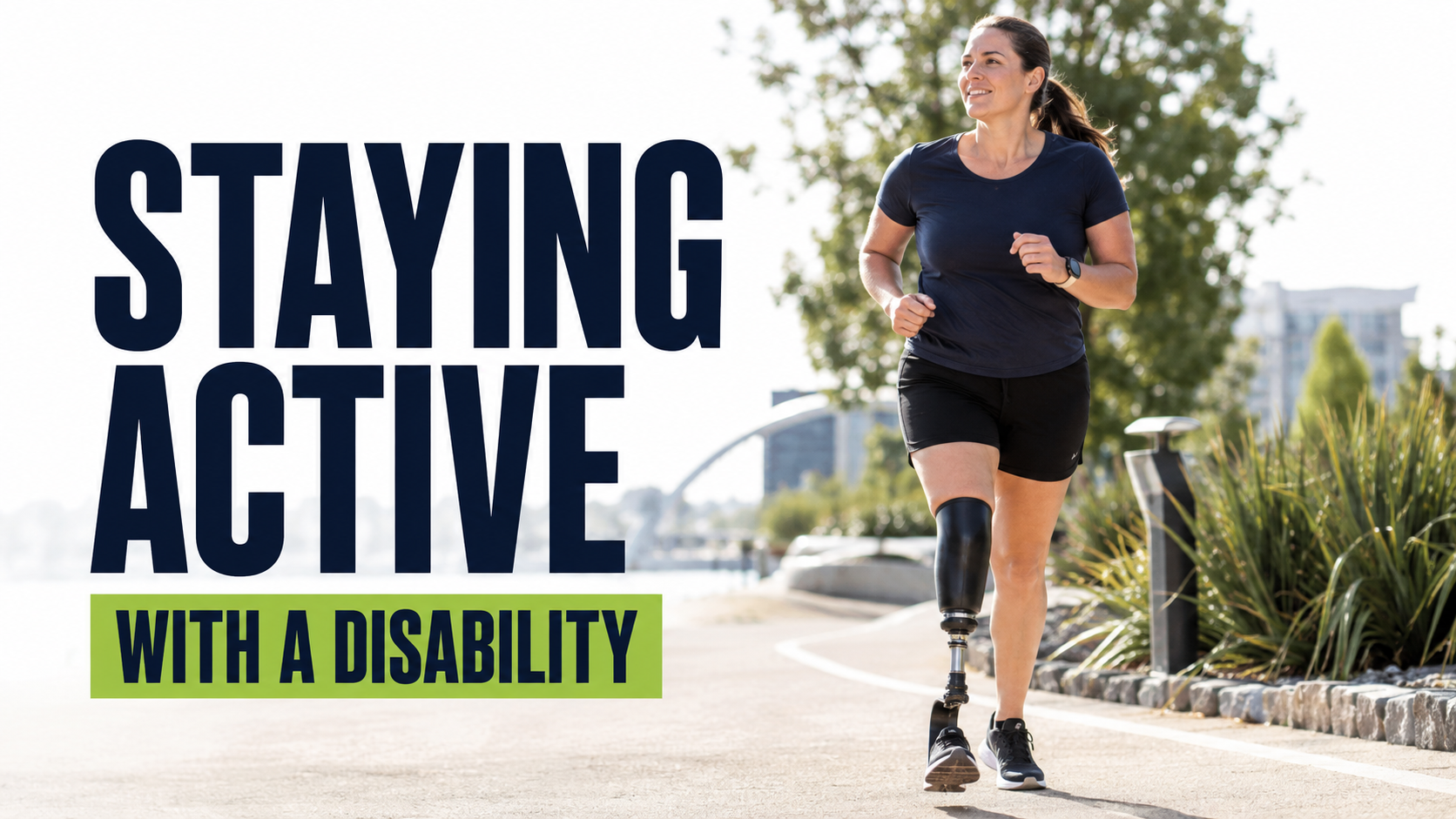
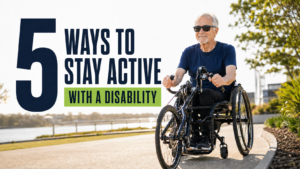
Five approaches cover most situations: low-impact and seated workouts, resistance training and flexibility work, movement built into daily tasks, mobility aids and accessible equipment, and the habits that keep you motivated. Which mix suits you depends on your abilities, health needs and goals, and nearly every option can be adapted.
The activity types themselves break down like this:
- Aerobic activity such as walking, swimming or cycling, which helps heart health and energy
- Strength training using resistance bands, bodyweight or weights, which supports muscles and joints
- Mobility and flexibility work like yoga, stretching or Pilates, which reduces stiffness and improves posture
- Water-based exercise such as hydrotherapy or swimming, which makes movement easier and takes impact off the joints
- Adaptive and inclusive sports like wheelchair basketball, boccia, hand cycling or seated aerobics, which add a social side
Before you start something new, check it with your GP, an exercise physiologist, a physiotherapist or an occupational therapist. They will confirm it is safe for you and that you are doing the movements correctly.
1. Low-impact and seated workouts
Seated workouts, whether yoga-based or using resistance bands or weights, improve range of motion and strengthen the upper and lower limbs, trunk, neck and shoulders. You can lift your heart rate within the medical guidelines using bigger arm movements: arm cycling, boxing or dancing. If your upper limbs are impaired, the same idea works with your legs, and seated marching is a starting point.
Water-based exercise is the other low-impact route. Many pools have ramp access or a hoist if stairs are not workable, and swimming laps is not the point. Walking in the water, or doing resistance exercises while holding the side of the pool, is enough to be useful. Warm water also relieves pain and takes pressure off the joints, so people with joint problems such as arthritis often manage more in a pool than they can on land.
2. Resistance training and flexibility
Resistance and body-weight exercises carry a lot of the benefit here, and most of them can be adapted to the individual. Aim for at least three sessions a week to get the most out of them.
Equipment is optional. Bicep curls work sitting down with light weights, resistance bands, tins of food or bags of rice. Leg raises work seated, or even lying on a bed. Walking counts as weight-bearing exercise even if you use a walking stick or a four-wheeled walker. The less time you spend sitting, the better it is for your health.
3. Build movement into daily life
Not every bit of activity needs to look like exercise. Day-to-day tasks you actually enjoy, gardening, knitting or craft work, still build range of motion and strength, and they can be done from a seated position.
Stenner makes the point that these tasks also keep the mind active and engaged, which feeds back into overall strength.
4. Mobility aids and accessible equipment
Equipment has been catching up. There has been a strong community push to make exercise equipment more inclusive, so check what exists locally before assuming nothing suits you.
Your local council can tell you which outdoor gyms nearby have adaptive equipment, and your health professional will know which fitness centres carry it.
5. Staying motivated
Small goals beat ambitious ones. Start with a 10-minute walk or a resistance session twice a week, then lift the target once that feels routine.
Company helps. Exercising with a friend or a family member improves motivation, and music or a podcast makes a solo session easier to finish. Many gyms run classes built for lower mobility, such as chair-based workouts or low-intensity yoga, and there are online programs you can do at home and modify to your own ability.
How to start exercising safely
Have a GP, exercise physiologist, physiotherapist or occupational therapist confirm the plan is safe for you before the first session. If you have been inactive for a while, a week of stretching, a short walk or a swim is enough to begin with. Work within your limitations, and check whether your medication affects heart rate, blood pressure or blood-sugar levels.
Some medicines affect all three, which is why that check matters more than it sounds. If your mobility is very limited, exercising under the supervision of an exercise physiologist or a physiotherapist in a clinic setting is the safer choice.
Where to get expert support in Australia
An Accredited Exercise Physiologist (AEP) and an Accredited Exercise Scientist (AES) are exercise professionals accredited by Exercise & Sports Science Australia. Either can assess your situation, set the program and adjust it as you progress. Exercise physiology services can also be funded through the National Disability Insurance Scheme (NDIS), so ask whether they fit your plan.
Exercise & Sports Science Australia runs a member search you can use to find an accredited exercise professional near you.
Other Australian organisations that can help:
- Australian Physiotherapy Association
- Occupational Therapy Australia
- Disability Sports Australia
- Safe Exercise at Home
- National Ageing Research Institute, for at-home exercises for older people