
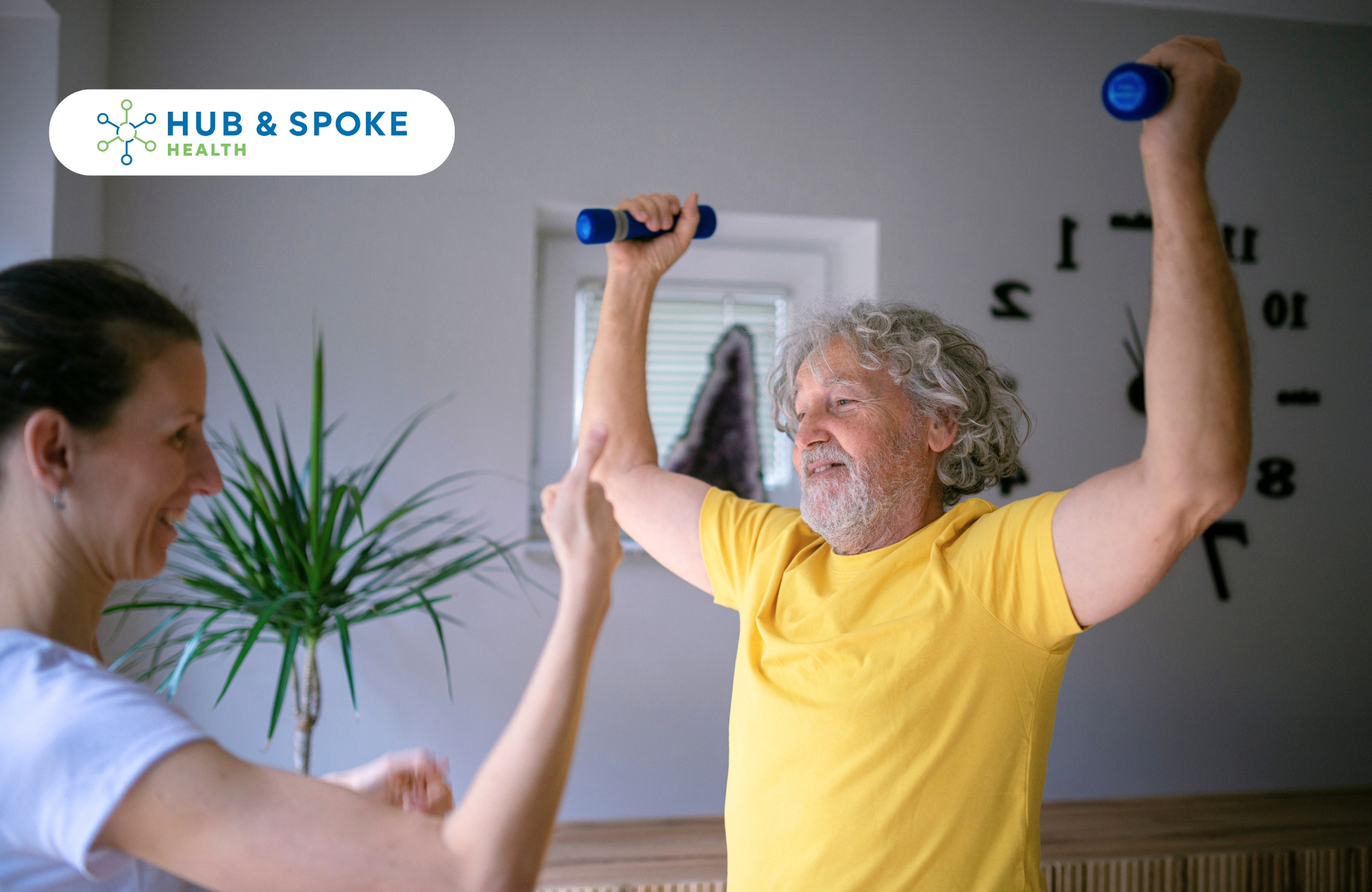
Not only for athletes: Why older adults should be doing power training too?
As we get older, most people know it’s important to stay active, maintain strength, and keep
moving. But there’s one key element that often gets overlooked in older adults – power.
It isn’t only about sprinting or lifting heavy weights like an athlete. Power is your ability to move quickly and efficiently. And it’s one of the most important attributes to maintain as you age.
What is power training? Power = Strength + Speed.
Power training focuses on performing movements quickly and explosively (or powerfully!), rather than lifting or moving slowly with control for an exercise, although both are important and depend on the context and aims of the exercise.
Some examples of power training include standing up from a chair with some speed or
stepping up onto a step with purpose are power-based movements.
Why is power important?
As we get older, both muscle strength and power decline. But a decline in power can manifest much more significantly. Power is what allows us to react quickly and prevent falls, get up off the floor, walk faster, climb stairs, and maintain independence in daily life.
Here are just a few reasons to focus on power training:
- Improved balance and reaction time – Helps reduce fall risk
- Better mobility – Makes walking, stair climbing, and standing up from chairs easier
- Supports confidence and independence – People move more when they feel safe doing so
- Backed by research – Studies show that power training can significantly improve function in older adults and even reduce the likelihood of falls
Read More: Strength Training versus Power Training
Common Misconceptions about Power Training
“Isn’t that too dangerous for older adults?”
- Not at all! When done with guidance and modified to suit individual needs, power training is both safe and extremely effective—even in people over 80.
“Isn’t walking enough?”
- Walking is great for endurance, but it doesn’t improve your ability to move quickly. Adding just a few power-based exercises can make a huge difference in day-to-day function.
Final Thoughts: Start Small, Think Big
Including power training into a health exercise programme is all about staying functional,
confident, and independent. Even small doses can have a big impact on quality of life.
At Hub and Spoke Health, we understand that staying active as you age is about more than just strength—it’s about confidence, mobility, and independence. Our tailored exercise programs, including power training, are designed to keep you moving safely and effectively at every stage of life.
If you’re ready to take charge of your health and independence, book a consultation with Hub and Spoke Health today.