
Aging changes the way the body responds to pressure, touch, and movement. Joints stiffen, skin thins, muscles shorten from reduced use, and conditions such as arthritis or osteoporosis introduce physical risks that a younger body does not carry. For many older Australians and their carers, the question of whether massage is safe for older adults comes with real concern about bruising, discomfort, or making an existing condition worse.
Hub & Spoke Health is a mobile allied health practice that delivers massage therapy to older adults across Melbourne. Therapists travel to the person’s home and adapt every session to their health status, mobility, and comfort level.
Is massage therapy safe for older adults?
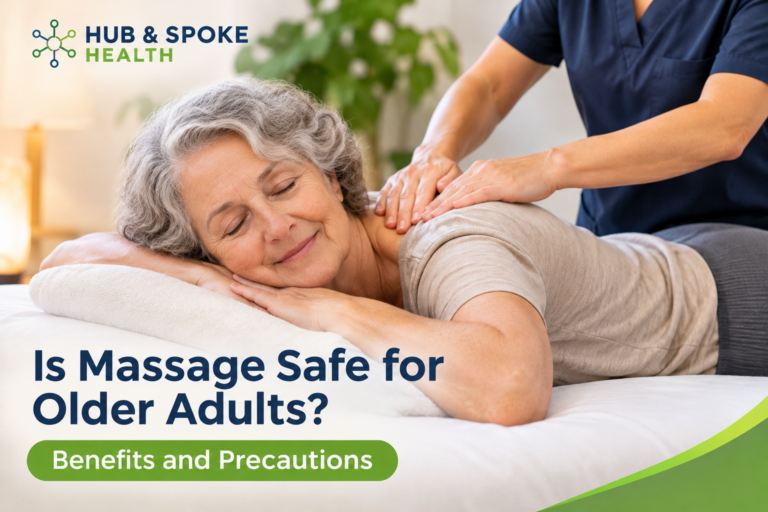
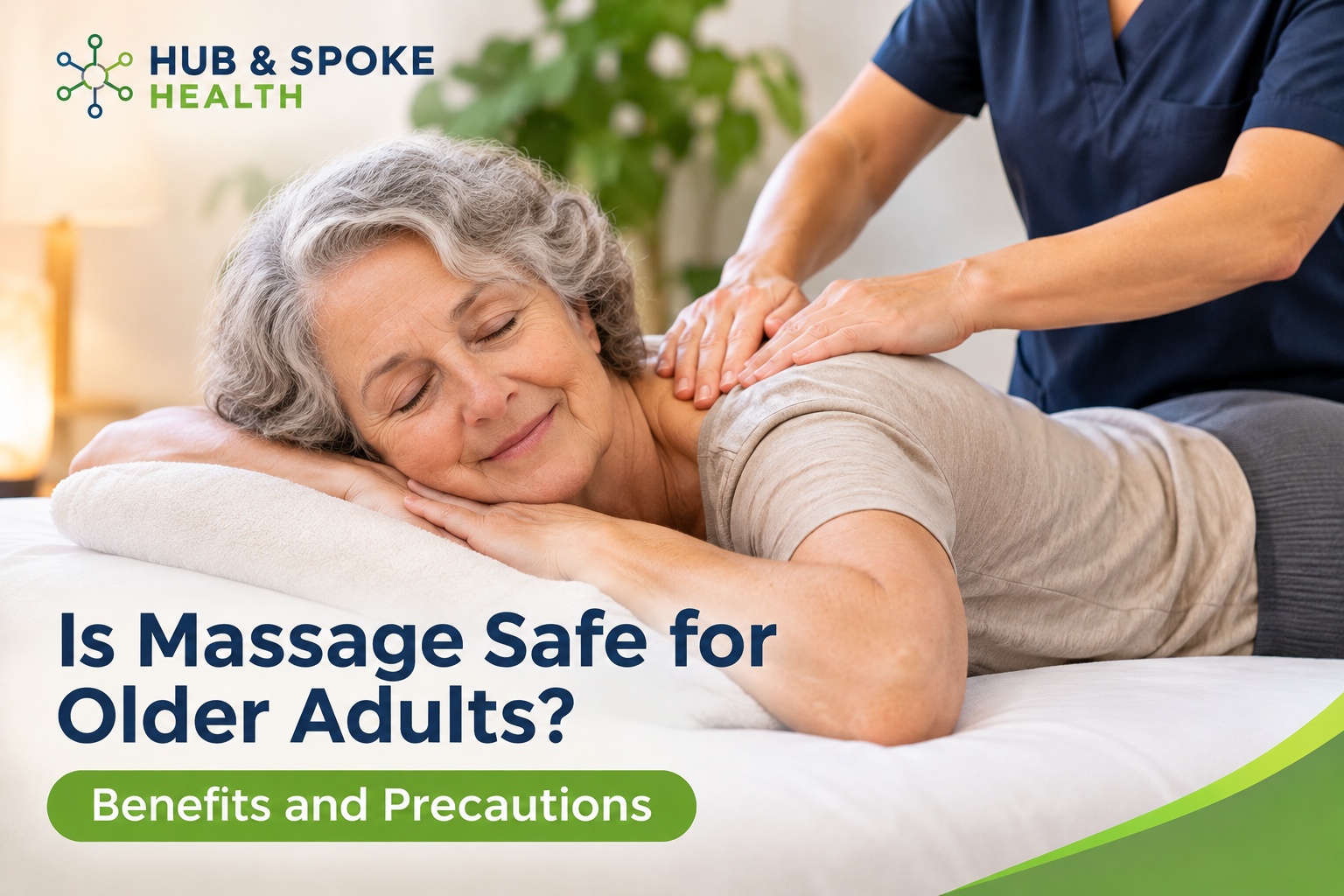
Massage therapy is safe for most older adults when a qualified therapist adjusts pressure, positioning, and session length to match the person’s health needs and frailty level. The National Center for Complementary and Integrative Health (NCCIH) states that massage appears to have few risks when used appropriately and provided by a trained professional.
The difference between standard massage and massage for an older person comes down to adaptation. An experienced aged care massage therapist assesses medical history, current medications, skin condition, and joint mobility before choosing techniques. Sessions typically run 30 to 45 minutes rather than the standard 60 to 90 minutes. Supine and seated positions are preferred over prone, which places pressure on the chest and can restrict breathing.
Aging skin bruises more easily, heals more slowly, and tears under less force than younger skin. These changes are normal, but they mean a therapist cannot apply the same depth of pressure used on a 35-year-old. Lighter, rhythmic strokes and adequate massage oil reduce friction and protect fragile tissue.
What are the benefits of massage for older adults?
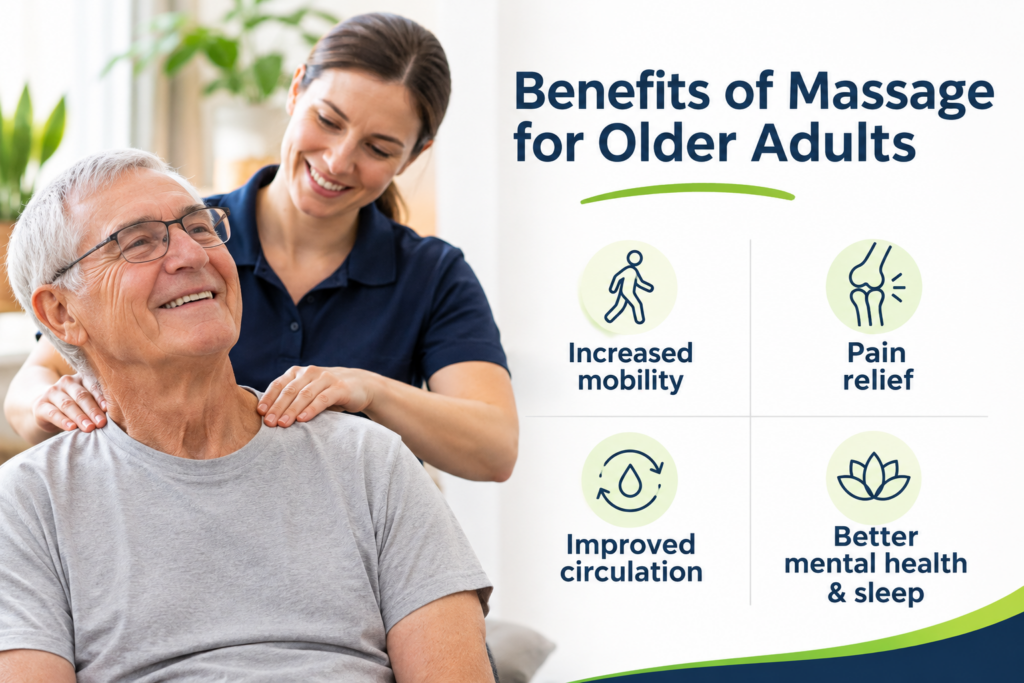
Regular massage therapy eases joint and muscle pain, improves mobility and circulation, supports better sleep, and reduces stress, anxiety, and loneliness. These benefits span physical function, emotional wellbeing, and the ability to live independently for longer.
Increased mobility
Joints stiffen and muscles shorten with age, often due to reduced activity and postural changes that accumulate over years. Treatment reduces muscle tension and increases range of movement, helping older adults walk more comfortably, get in and out of chairs, and participate in gentle exercise. When everyday movements feel physically more manageable, people are more willing to remain active, and that activity supports further mobility over time.
Improved mobility also reduces the risk of falls, one of the most common causes of hospitalisation among Australians aged 65 and over. For more on fall response and recovery, see the Hub & Spoke Health guide on what to do after a fall in the elderly.
Pain relief
Chronic pain in the back, joints, or muscles is one of the most common reasons older adults seek massage. Treatment targets the specific area of soreness for immediate relief while also reducing pain over time through improved circulation and decreased muscle stiffness. For people managing osteoarthritis or lower back problems, regular sessions can lower overall pain levels and reduce the need for pain medication.
Massage works well alongside physiotherapy for chronic pain. Many allied health treatment plans incorporate both, using physiotherapy to rebuild strength and massage to manage the pain and tension that build up between exercise sessions.
Improved circulation
Blood flow through soft tissues and muscles increases with regular treatment. For older adults who spend long periods sitting or have reduced activity levels, poor circulation can lead to muscle tightness, swelling in the limbs, fatigue, and slower recovery after physical exertion. Regular massage helps counter these effects by encouraging blood flow to areas that do not receive enough on their own.
Better circulation also delivers more oxygen and nutrients to healing tissues, which is why massage is commonly included in post-surgical and injury recovery plans for older adults.
Mental health and emotional wellbeing
Living with chronic pain, reduced independence, or social isolation takes a toll on mood. The direct stress relief and oxytocin released through human touch are both well documented. For older adults living alone or in aged care settings, the regular contact with a therapist can reduce feelings of loneliness, agitation, and anxiety.
Relaxation from massage also supports better sleep. Many older adults experience disrupted sleep patterns, and the reduction in muscle tension and cortisol levels after a session can improve both the ability to fall asleep and the quality of rest through the night.
What precautions should a therapist take with older clients?
A massage therapist working with older adults needs specialised knowledge about how the body changes with age. The techniques, pressure, and approach that suit a younger, healthy client are not appropriate for someone with thinning skin, fragile bones, or medications that alter pain sensation.
Pressure must be adapted from the first minute. Deep tissue techniques carry a higher risk of bruising, skin tears, or discomfort in older bodies. The therapist begins with minimal pressure and increases only if the person is comfortable and their skin and muscle condition allow it.
Medications change how the body responds to treatment. Blood thinners increase bruising risk even from light pressure. Some pain medications dull sensation, meaning the person cannot feel when pressure is too strong, and hot stone massage is generally unsuitable for the same reason. A thorough medication review before the first session prevents these problems.
Communication is not optional. The therapist should check in regularly during the session, and the older adult should feel comfortable saying at any point that something is not right. Massage for older adults should only be performed by professionals who have training in aged care, as the risks of working without that knowledge are real.
Hub & Spoke Health’s mobile massage therapists assess each client before every session and bring a portable treatment table to the person’s home. This removes the need to travel, which is especially valuable for older adults with limited mobility or complex health needs.
When should older adults avoid massage?
Certain medical conditions require modified massage techniques, and some mean treatment should be postponed until the condition is managed. Healthdirect Australia identifies the following as situations where massage carries a higher risk of harm:
- Acute inflammation or infection at the treatment site
- Deep vein thrombosis (DVT) or a history of blood clots
- Non-consolidated fractures or recent broken bones
- Severe osteoporosis, where even light pressure could cause fracture
- Burns, open wounds, or weeping skin conditions
- Heart failure or kidney failure
- Areas with varicose or distended veins
Osteoporosis requires particular attention. Many older Australians live with some degree of bone density loss. In mild to moderate cases, massage is still safe with reduced pressure and avoidance of direct force over the spine, ribs, and other vulnerable areas. Severe osteoporosis is a different situation. The risk of compression fracture from manual pressure is real, and a GP should confirm that massage is appropriate before sessions begin.
If a condition is not listed here but raises concern, the safest step is to consult the treating GP before booking a session.
How is massage for older adults funded in Australia?
Remedial massage can be funded under the Australian Government’s Support at Home program, which replaced Home Care Packages in July 2025. Under Support at Home, remedial massage is available when included in a prescribed allied health treatment plan to address functional decline and when delivered by an accredited massage therapist. My Aged Care lists remedial massage under therapeutic services for independent living.
Eligibility is determined through an aged care assessment coordinated by My Aged Care. Once approved, the person’s plan can include massage alongside other services such as physiotherapy, podiatry, and exercise physiology. For those not eligible for government-funded care, private remedial massage sessions are available without a referral. Hub & Spoke Health offers mobile massage to older adults across Melbourne, with therapists who travel to the person’s home and bring all necessary equipment.
Frequently asked questions
How often should an older adult get a massage?
Frequency depends on the condition being managed and the person’s overall health. Fortnightly sessions are common for general maintenance and mobility. Older adults managing chronic pain or recovering from surgery often start with weekly sessions and taper as symptoms improve. The treating therapist adjusts the schedule based on how the person responds.
What type of massage is best for older adults?
Geriatric massage uses lighter pressure, shorter sessions, and modified positioning suited to older bodies. Swedish massage with gentle techniques is also appropriate. Deep tissue massage and hot stone therapy are generally not recommended for frail or elderly clients unless the therapist has specific aged care training and medical clearance has been given.
Do I need a referral for aged care massage?
No referral is required for private massage therapy sessions. For massage funded under Support at Home or the CHSP, an assessment through My Aged Care determines eligibility and the services included in the person’s plan. Hub & Spoke Health can help determine which funding pathway applies to your situation.
Can massage help someone with dementia?
Massage can reduce agitation, improve sleep quality, and provide comfort for people living with dementia, even when verbal communication is limited. The sensory experience of gentle touch is calming and may reduce behaviours associated with anxiety or restlessness. Sessions for people with dementia are typically shorter and focused on hands, feet, and shoulders.
Speak with Hub & Spoke Health about mobile massage for an older person in your care. Call 1800 166 167 or submit a referral online.