
Exercise and staying active play important roles in living well with Parkinson’s disease, from diagnosis throughout the course of the condition. Movement is not a cure, but it is one of the most powerful tools available to support the brain, reduce disability, and maintain independence for as long as possible.
Parkinson’s affects the brain networks that coordinate movement, posture, and automatic reactions. Over time, this can lead to smaller and slower steps, increased stiffness and rigidity, decreased arm swing, stooped posture, and a higher risk of falls. The right exercises and movement strategies can help counteract these changes at every stage.
According to the Parkinson’s Outcomes Project, increasing physical activity to at least 2.5 hours per week can slow symptom progression. Best practice includes early referral to physiotherapy and encouraging exercise as a core part of treatment, not an optional extra.
Why Physiotherapy Matters for Parkinson’s
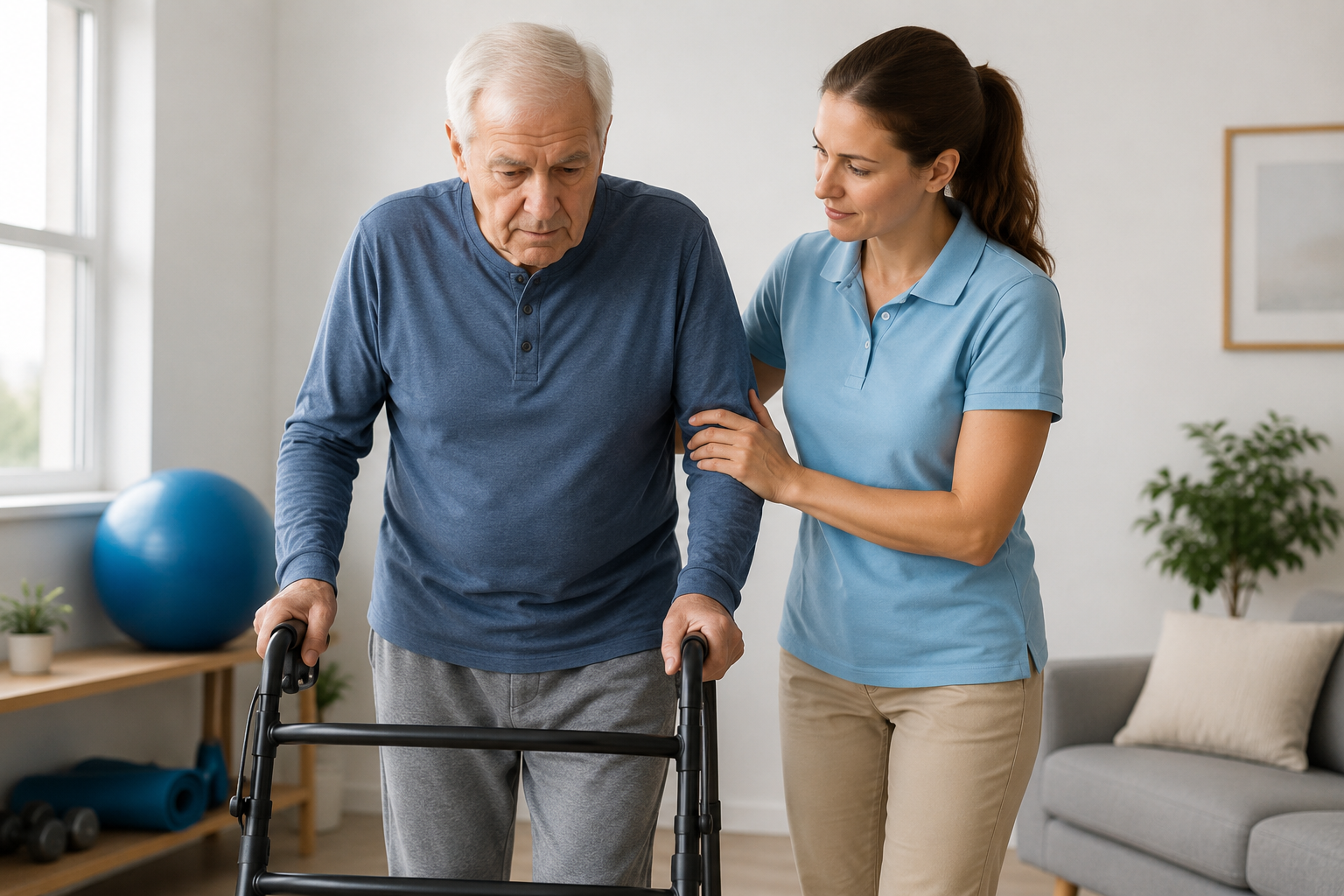
Physiotherapists who specialise in neurological conditions are uniquely trained to design exercise routines that target the specific motor impairments caused by Parkinson’s disease. They can identify movement issues early, often before they become obvious, and provide direct feedback to help patients exercise more effectively and safely.
A physiotherapist can help with:
- Education and self-management advice
- Exercise routines associated with improvements in mobility, quality of life, and disease severity
- Guidance on the type, intensity, frequency, and duration of exercise that is best for the individual
- Walking difficulties, including slowness, small steps, or freezing (feeling glued to the floor)
- Balance and stability
- Posture correction
- Pain management
- Moving around the house (getting up from a chair, moving around in bed)
- Getting in and out of a car, managing stairs, and navigating uneven ground
- Addressing fear of falling
For people with Parkinson’s in Australia, mobile physiotherapy brings this specialist support directly into the home, where the therapist can assess real-world challenges and design exercises around the patient’s actual living environment.
Key Types of Exercise for Parkinson’s Mobility
A well-rounded Parkinson’s exercise plan includes four main categories: aerobic exercise, strength training, flexibility and mobility work, and balance and coordination training. Each plays a different role in supporting the brain and body.
1. Aerobic Exercise
Aerobic exercise gets the heart rate up and keeps it elevated. For Parkinson’s patients, this helps support blood flow to the brain, improve endurance for daily activities, and reduce fatigue and non-motor symptoms like low mood.
Suitable aerobic options include:
- Brisk walking (indoors, outdoors, or on a treadmill)
- Stationary cycling (upright or recumbent bike)
- Swimming or water aerobics, which are gentle on the joints
- Dancing, which also challenges coordination and rhythm
Start with short, manageable sessions of 10 to 15 minutes and gradually build up. Consistency matters more than intensity, especially in the beginning.
2. Strength Training
Strength training helps maintain the muscle power needed for getting out of chairs, climbing stairs, carrying objects, and catching yourself when you stumble. Key areas to focus on include:
- Legs and hips: for walking, rising, and balance
- Core muscles: for posture and stability
- Upper back and shoulders: to counteract stooping and rounded posture
Simple strength exercises that can be done at home include sit-to-stand drills from a firm chair, mini squats holding onto a countertop, heel raises while holding a support, wall push-ups, and resistance band rows to open the chest and activate the upper back.
Focus on slow, controlled movements rather than speed. Add resistance gradually as the body adapts. A physiotherapist or exercise physiologist can help design a program that targets the right muscle groups for each individual’s needs.
3. Flexibility and Mobility Work
Stiffness and rigidity are major challenges in Parkinson’s disease. Gentle stretching and mobility work can ease tight muscles, improve range of motion, and support better posture and smoother walking.
Helpful flexibility exercises include:
- Neck and shoulder stretches to counteract forward head position and rounded shoulders
- Chest opening stretches (hands behind the back or supported on a doorway)
- Hip flexor stretches to reduce forward lean
- Gentle trunk rotation while seated or lying down
Move into stretches slowly and never force a joint into pain. The goal is comfort and gradual improvement, not extreme positions.
4. Balance and Coordination Training
Balance training is essential for people with Parkinson’s disease. Many people do not realise their balance has changed until they are already falling. The right exercises can improve stability on the feet, enhance the ability to recover from small stumbles, and increase confidence and independence.
Foundational balance exercises (always start near a solid support such as a countertop, heavy chair, or rail):
- Narrow stance balance: stand with feet closer together than usual and hold for 20 to 30 seconds
- Tandem stance: one foot directly in front of the other, heel-to-toe, like standing on a tightrope. Switch feet.
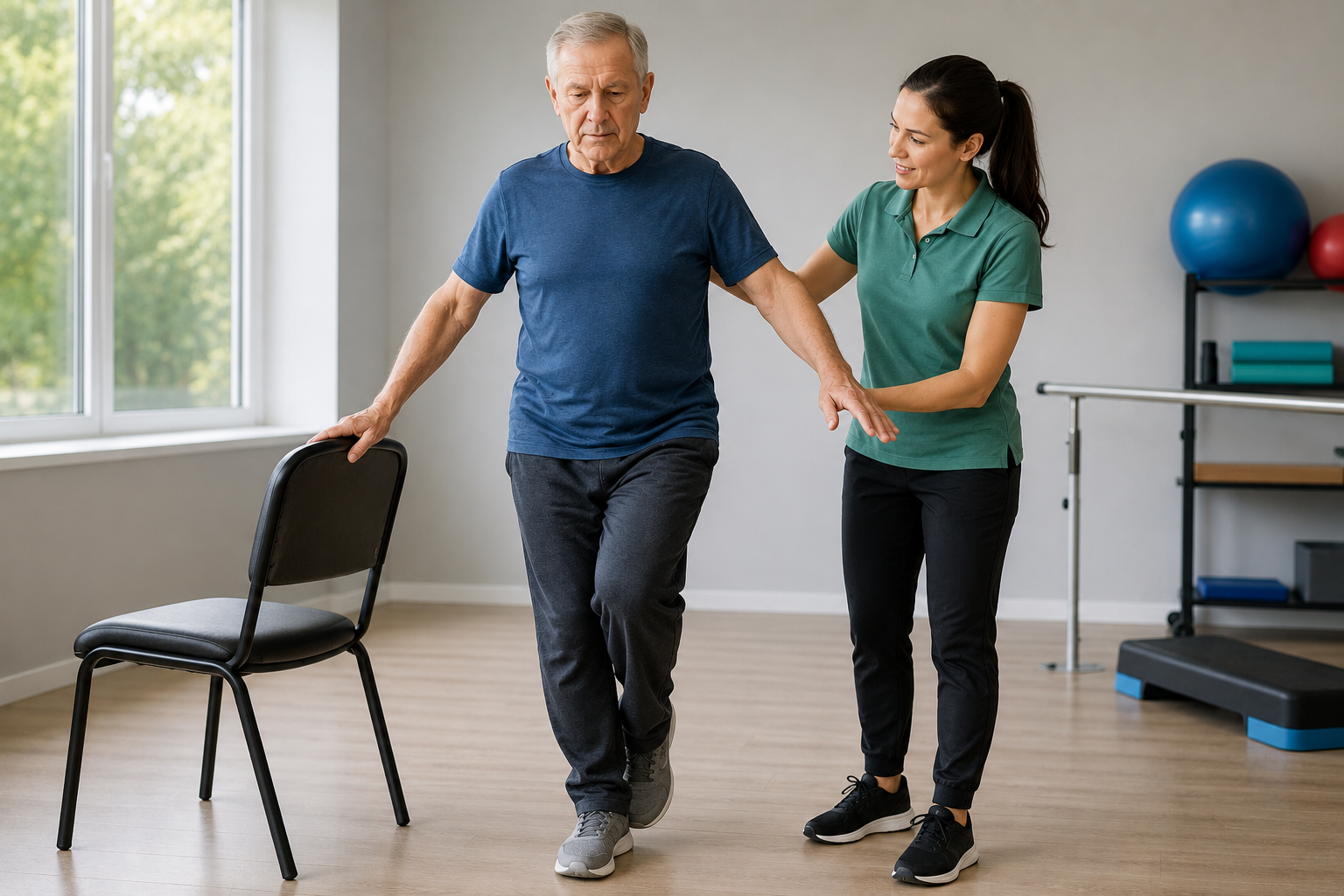
- Single-leg balance: lightly hold a counter while lifting one foot off the ground. Over time, reduce hand support.
- Weight shifts: gently shift weight from side to side or front to back while keeping feet planted
A structured falls prevention program with a physiotherapist can help build a progressive balance routine tailored to the individual’s current abilities and risk level.
Parkinson’s-Specific Movement Strategies
Because Parkinson’s affects movement programming in the brain, how you move matters just as much as what you do. These strategies can help patients move more safely and confidently:
Think big and bold: exaggerate steps, arm swings, and gestures. Intentionally making movements larger helps “wake up” neural pathways that tend to get underused in Parkinson’s. Think “big and bold” rather than small and cautious.
Use rhythm and cueing: counting steps or walking to music can help start and maintain smooth walking. External cues bypass some of the automatic movement difficulties caused by Parkinson’s.
Break tasks into deliberate steps: for turning, for example, pause, plant your feet, then deliberately pivot rather than twisting quickly. This reduces the risk of freezing or losing balance mid-movement.
Practice functional tasks: getting in and out of chairs, turning in hallways, navigating doorways, and rolling over in bed are all specific skills that can be practised and improved with repetition and guidance.
A Sample Daily Routine
Here is an example of what a gentle Parkinson’s exercise day might look like. This should be adapted with guidance from a physiotherapist or exercise physiologist based on the individual’s stage of Parkinson’s, fitness level, and other health conditions.
Morning (10 to 15 minutes):
- Gentle neck, shoulder, and trunk stretches
- 10 sit-to-stand repetitions from a firm chair
- 2 to 3 sets of 10 heel raises holding a counter
Afternoon (20 to 30 minutes):
- Brisk walk or stationary bike at a comfortable pace
- Finish with a few minutes of slower walking or pedalling to cool down
Evening (10 to 15 minutes):
- Balance exercises near the counter (narrow stance, tandem, weight shifts)
- Relaxed breathing and gentle chest-opening stretches
Safety Considerations
Before starting any new exercise program, consider these important safety questions:
- Does the person have a history of falls or near-falls?
- Do they feel lightheaded when standing?
- Do they have significant heart, lung, or joint problems?
- Are they currently using a walking aid such as a cane or walker?
If any of these apply, it is important to talk with a neurologist or GP before starting, work with a physiotherapist to design a plan that is challenging but safe, use a stable support for balance exercises, and have someone nearby when first trying new movements.
The goal is to challenge the system without creating fear or risking injury. Even people with a high fall risk benefit from balance training when it is structured carefully and progresses gradually.
The Role of Allied Health in Parkinson’s Care
Managing Parkinson’s mobility effectively often involves more than one type of health professional working together:
- Physiotherapists: design exercise programs targeting strength, balance, gait, and posture
- Exercise physiologists: support structured physical activity programs for managing chronic conditions
- Occupational therapists: help adapt the home environment and rebuild independence in daily tasks like dressing, cooking, and bathing
- Dietitians: ensure nutrition supports energy levels and overall health during the course of the condition
- Speech therapists: address voice and swallowing difficulties that can develop with Parkinson’s
A coordinated mobile allied health team that communicates and collaborates can address the full range of challenges Parkinson’s presents, rather than treating each symptom in isolation.
Supporting Mobility at Every Stage
Exercise and targeted movement training can make a difference at every stage of Parkinson’s disease, including later stages. While the focus may shift from intensive training to maintaining mobility, preventing complications, and supporting safer transfers and walking, the benefits of consistent movement remain significant.
Most people with Parkinson’s benefit from moving in some way every day. Several days per week of more focused exercise (20 to 40 minutes of walking, cycling, or structured training) combined with daily stretching, balance work, and general physical activity provides a strong foundation. Smaller amounts done regularly are far more powerful than rare, exhausting workouts.
The right support makes the difference. Working with a physiotherapist who understands neurological conditions and can tailor a progressive, safe program to the individual’s changing needs gives Parkinson’s patients the best chance of maintaining their mobility and quality of life for as long as possible.