

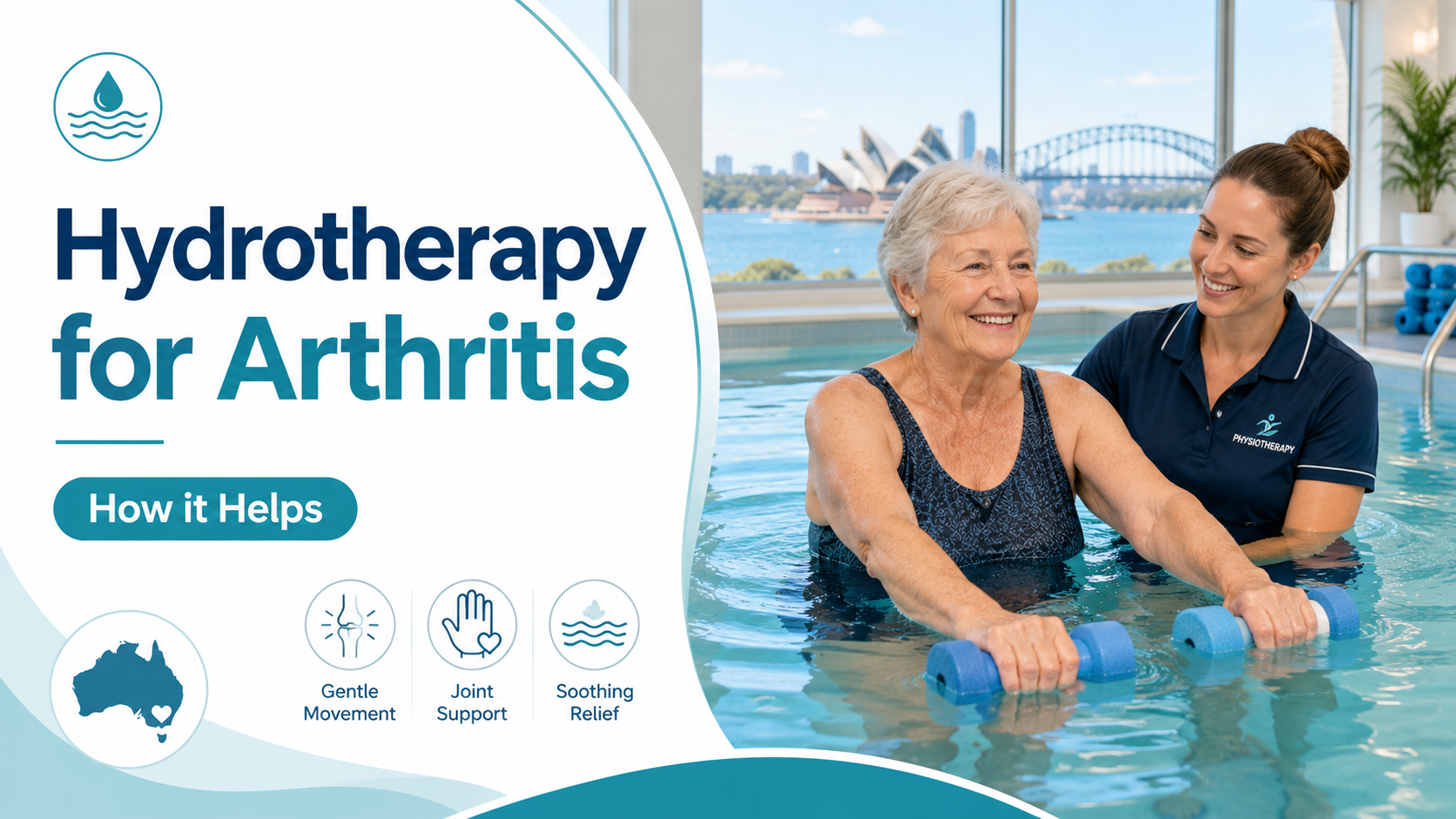
If you live with arthritis, you’ll know the bind: exercise is one of the most important things you can do to manage the condition, but moving the very joints that hurt is the last thing your body feels like doing. This is exactly where hydrotherapy comes in.
Hydrotherapy, also known as aquatic therapy, aqua therapy, or pool therapy, is one of the most comfortable and effective ways for a person with arthritis to keep moving. The water takes the load off painful joints, the warmth eases stiffness, and the gentle resistance helps you build strength without the impact of land-based exercise.
This article walks through what hydrotherapy actually is, how it helps arthritis specifically, who it suits, and how to get started safely.
What is hydrotherapy?
Hydrotherapy is the use of water-based exercise to treat or manage health conditions and to improve overall wellbeing. It’s a form of physical therapy that’s used for injury recovery, chronic pain management, post-surgical rehab, and managing long-term conditions like arthritis.
It usually takes place in a hydrotherapy pool – a pool heated to around 34 degrees Celsius, much warmer than a public swimming pool (which is typically around 28 degrees). The extra warmth is what makes the difference: it relaxes muscles, loosens stiff joints, and keeps you comfortable enough to actually exercise.
Hydrotherapy pools are usually found in:
- Hospitals
- Community health and rehabilitation centres
- Some physiotherapy clinics
- Leisure centre complexes with a dedicated warm-water pool
Most have a ramp, hoist, or gently sloping steps instead of a ladder, so it’s easier to get in and out if your mobility is limited.
How does hydrotherapy work for arthritis?
Four properties of water do the heavy lifting here: buoyancy, warmth, hydrostatic pressure, and resistance.
Buoyancy takes the weight off painful joints. When you stand in chest-deep water, your legs only have to support about a third of your body weight. That’s a huge relief for arthritic knees, hips, ankles, feet, and lower backs, and it’s why many people find they can move freely in water when land-based exercise is too painful.
Warmth relaxes tight muscles and soothes stiff joints. The heat increases blood flow to the area, which warms up the tissues so they move more easily and feel less painful.
Hydrostatic pressure – the gentle pressure water exerts on your body – helps reduce swelling and improves circulation around inflamed joints.
Resistance is built into every movement. Water provides as little or as much resistance as you put into it, which means you can build strength gradually without lifting weights, and without sudden loading on the joints.
Put together, these properties allow you to exercise the same joints that hurt on land – without the pain, the impact, or the fear of making things worse.
What are the benefits of hydrotherapy for arthritis?
For people living with arthritis, hydrotherapy can deliver real, measurable improvements. Patients who use hydrotherapy regularly often report:
- Reduced joint pain and morning stiffness
- Better range of motion and flexibility
- Improved muscle strength around affected joints
- Less pressure and load on joints, muscles, and bones
- Better balance, endurance, and aerobic fitness
- Improved circulation and reduced swelling
- Easier pre- and post-surgical rehab (especially around joint replacements)
- A boost in confidence, mood, and overall quality of life
Research backs this up. Studies have shown that exercises performed in a heated pool produce meaningfully greater improvements than the same exercises performed on land, and people with arthritis who do hydrotherapy regularly report significant reductions in pain alongside gains in physical function, aerobic conditioning, and quality of life.
Who benefits from hydrotherapy for arthritis?
Hydrotherapy can be helpful for almost any form of arthritis. It’s particularly useful if you:
- Have arthritis in multiple joints, since all joints can be exercised at once
- Have arthritis affecting your feet, knees, hips, or back
- Are preparing for or recovering from joint replacement surgery (knees, hips)
- Have osteoarthritis, rheumatoid arthritis, ankylosing spondylitis, or psoriatic arthritis
- Find land-based exercise too painful or difficult
- Are new to exercise and want a low-impact way to start
- Have other conditions alongside arthritis, like back pain, fibromyalgia, or recent surgery
If pain or stiffness has been the main reason you’ve given up on exercise, hydrotherapy is often the way back in.
What hydrotherapy exercises help with arthritis?
A hydrotherapy program is always tailored to your condition by a physiotherapist or exercise physiologist, but most arthritis programs include a mix of the following:
- Walking in water – simple, low-impact movement for five to ten minutes to get circulation going and warm up the joints. The water’s buoyancy protects your knees and hips from impact while still working the muscles around them.
- Knee bends – standing against the pool wall for support, bend one knee so your thigh is parallel to the water’s surface, then straighten. Alternate legs. Great for quad and hamstring strength around an arthritic knee.
- Leg raises – holding the side of the pool, lift one slightly bent leg out to the side or front as high as it will go, then lower. Strengthens hip muscles and improves stability.
- Ankle and toe exercises – point your foot down, then up; curl and straighten your toes; make small circles with your ankle in each direction. Excellent for arthritic feet and ankles.
- Elbow, wrist, and finger work – bend your elbows and bring your fingertips toward your shoulders, then straighten. Open and close your hands underwater against the resistance. Useful for rheumatoid arthritis affecting the hands.
- Squats in deeper water – gentle squats with the water supporting your weight, building strength in the quads, hips, and glutes without loading the knees.
Stretching, gentle joint mobilisation, and aerobic walking laps can also form part of the program. The key is that everything is prescribed for you, by someone qualified, rather than copied from the person in the next lane.
What does a hydrotherapy session look like?
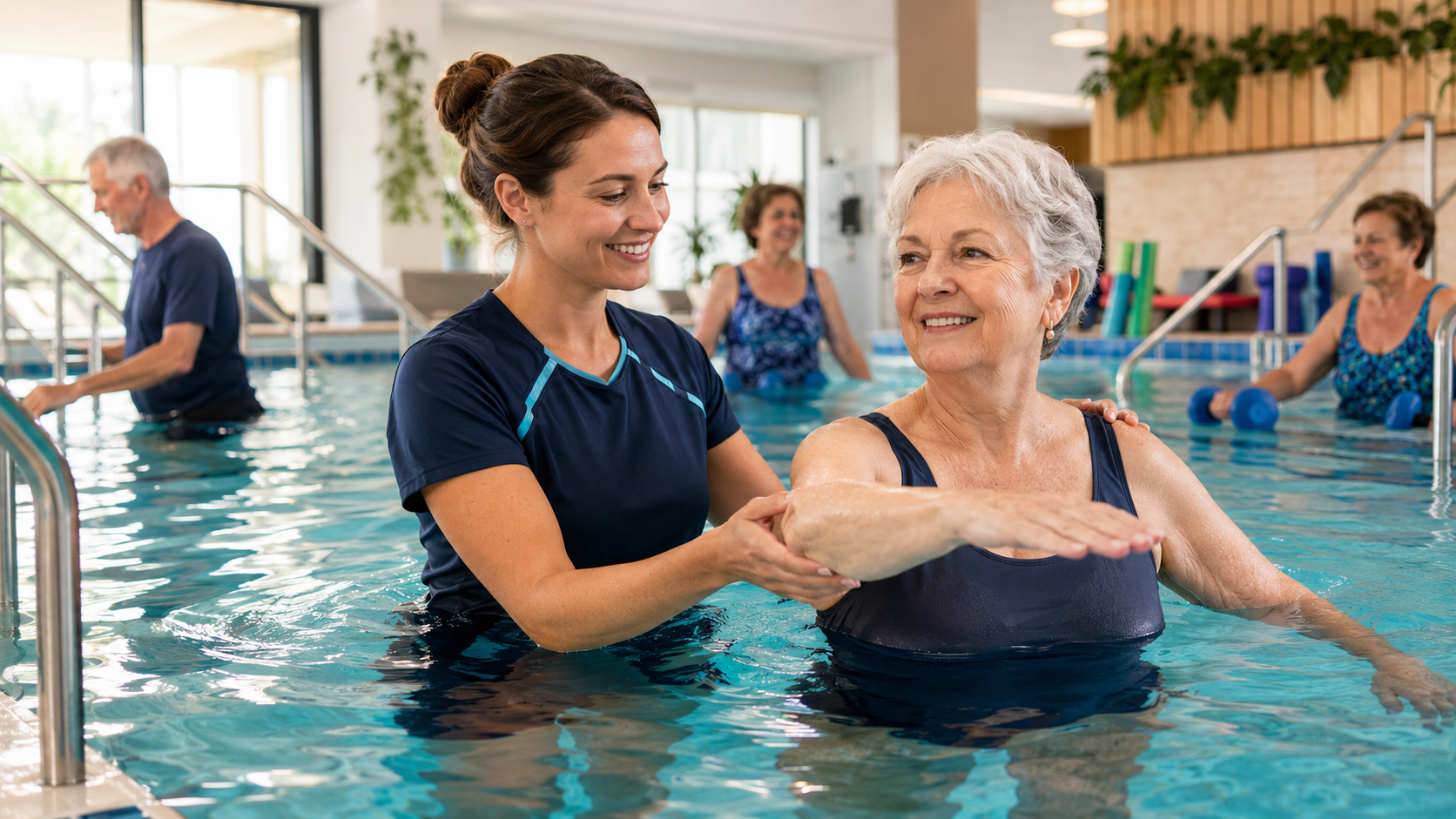
Your first hydrotherapy session usually starts with an assessment in the pool. A physiotherapist with aquatic training will get in the water with you to run through your current capabilities – range of motion, strength, balance, and how the affected joints respond to movement.
From there, they’ll prescribe a program of specific exercises for your condition, coach you through technique, and may also use hands-on techniques like joint mobilisation or stretching while you’re supported by the water.
In follow-up sessions, your physiotherapist may stay in the pool with you or supervise from the deck, depending on your needs and confidence. Once you’re familiar with your program, many people progress to doing it independently during open hydrotherapy pool times, or join a gentle group water exercise class.
What if I can’t swim?
You don’t need to swim to do hydrotherapy. Most hydrotherapy programs and gentle water classes are run in chest-deep water, and you won’t be asked to put your head under.
What you do need is enough confidence to let go of the pool edge and walk around in the water without panicking. If you’re not there yet, one-on-one sessions with an aquatic physiotherapist are usually the best place to start. They’ll build your water confidence at the same time as treating your arthritis.
If continence is a concern, or you have any fear or uncertainty about being in the water, raise this at your initial appointment. A good clinic will run through a safety checklist before your first pool session to make sure hydrotherapy is the right option for you.
Is hydrotherapy safe with arthritis?
For most people, yes – and the warm water is often more comfortable than land-based exercise. That said, hydrotherapy isn’t right for everyone. You should speak to your doctor or physiotherapist first if you have:
- Heart conditions or uncontrolled high blood pressure (the warm water can affect heart rate and blood pressure)
- Open wounds, skin infections, or recent surgical incisions that haven’t fully healed
- A fever or active infection
- Severe continence issues
- Uncontrolled epilepsy
These aren’t automatic deal-breakers, but they’re reasons to plan the program carefully, sometimes with input from your GP or specialist.
How do I get started with hydrotherapy?
If you’d like to try hydrotherapy for your arthritis, you have a few options:
- Ask your GP, physiotherapist, or exercise physiologist for a referral to an aquatic physiotherapist
- Contact your local community health centre to ask whether they run hydrotherapy sessions or gentle water exercise classes
- Get in touch with your local Arthritis office for information on warm-water pools and arthritis-specific classes in your area
- If you have a chronic disease management plan from your GP, ask whether hydrotherapy sessions can be included
Whichever path you take, start with a qualified physiotherapist or exercise physiologist for the first few sessions. A program built around your joints, your stage of arthritis, and your fitness level will deliver far better results – and is much safer – than copying generic pool exercises off the internet.
The bottom line on hydrotherapy for arthritis
Hydrotherapy works because it removes most of the barriers that stop people with arthritis from exercising in the first place. The water supports your weight, the warmth eases your stiffness, the resistance builds your strength, and the pressure helps with swelling.
For many people, it’s the difference between being stuck on the couch and being able to keep moving, build strength, and stay independent. If arthritis pain has been pushing you away from exercise, a warm-water pool and a qualified physio in there with you is often the most effective place to start again.